Showing posts with label butterflies. Show all posts

Monday, May 5, 2025

HOW DOES YOUR GARDEN GROW? A Visit with Mrs. Best’s Kindergarten Class, Haynes School, Los Angeles, CA

School Garden 2025, Haynes Charter Elementary, Los Angeles, CA.

In the spring of 2022, my book PLANTING A GARDEN IN ROOM 6, the story of Mrs. Best’s kindergarteners and their school garden, was published by Charlesbridge. 


Last week I visited Mrs. Best’s to see how this year's garden was growing and to share some of my books with the students. The garden looked terrific with the peas, beans, carrots, lettuce, onions, tomatoes, and a patch of white alyssum, all growing like gangbusters. Earlier in the week the children had harvested the radishes—always the first to be ripe for picking.


In the classroom, the students are hatching eggs, which were in their ninth day of incubation on the day of my visit. They are scheduled to hatch on May 13. I read my book HATCHING CHICKS IN ROOM 6, which documented the children of Mrs. Best’s class of 2015 as they hatched eggs. After reading the book we talked about feathers and eggs. I measured the children's wingspans--most were peregrine falcons--and showed them my ostrich egg.


The students will also be growing butterflies, the topic of my book BUTTERFLIES IN ROOM 6. Their caterpillars had just arrived in the mail and the students will watch them grow, form chrysalises, and emerge as painted lady butterflies.


Soon the children will be adding earthworms to their garden. I finished my visit by reading WIGGLE AND WAGGLE and having the children sing the Wiggle and Waggle gardening song with me. It was a fun morning.

It is always a pleasure to visit Mrs. Best’s classroom at Haynes School. I love the way she does so many hands-on science projects with her students and to see their enthusiasm for them. I can’t thank her enough for her cooperation and collaboration with my Room 6 books. 
Caroline and Jennifer Best


Saturday, June 17, 2023

INTERVIEW: Writing and Researching A WARMER WORLD


I am pleased to say that my book A  WARMER WORLD: From Polar Bears to Butterflies, How Climate Change Affects Wildlife (Charlesbridge, 2012) is still in print and available at Amazon. As global temperatures continue to rise, it is even more relevant than when it was published eleven years ago.

The following interview appeared as an Author Spotlight at www.charlesbridge.com in April 2012 in conjunction with the publication of the book. 


It’s clear from your books that you love animals. Of all the different kinds of creatures
you’ve written about, do you have a favorite?
I like all kinds of animals, but birds have always been a favorite topic in my books. When I was a child I went on early-morning bird walks with my father, who was an amateur bird watcher, and now my husband, Art, studies birds in his research at UCLA. In my book Birds: Nature’s Magnificent Flying Machines, I focused on all the different ways a bird’s body is adapted for flight. In A Warmer World I looked at how climate change is affecting nesting and migration patterns, or, in the case of Antarctic penguins, how melting ice is diminishing their main food source, krill.

You’ve traveled extensively for research. What is your most memorable trip to date?
Over the years I have traveled to every continent except Antarctica and had many memorable trips, so it is hard to choose just one. Several years ago I went to Alaska for the first time. The most dramatic effects of global warming are seen in places like Alaska, which are in or close to the polar regions of the world. One day when we were traveling on the Kenai Peninsula, we took a boat trip to view Portage Glacier. When I got home, I compared my photos of the glacier with those taken by my parents, who had photographed the same glacier on a trip twenty years earlier. The glacier in our photos was visibly smaller. This was my first personal observation of the impact of global warming. It made me realize that even small changes in the world’s temperature can result in easily observable alterations to the landscape in a relatively short period of time.

How did you go about researching the different animals for A Warmer World?
My research process follows the same pattern for all of my books. I start in the library and read books and articles. I also search the internet. In many cases I consult scientists and other experts in the field. And whenever possible, I try to make my own observations about the animals in my books. Ideally, I like to see animals where they live in the wild. Several years ago I visited a penguin nesting colony in southern Chile. More often, though, I observe animals in zoos and wildlife parks. To learn about polar bears and walruses, I went to Sea World and the San Diego Zoo. The wonderful thing about zoos is that you can see huge animals like these just inches away on the other side of the glass. Basically, I discovered, walruses are huge lumps. They are a bit like your living room sofa with tusks. And yet they are surprisingly agile in the water.

Your parents helped run, and therefore lived in, a settlement house. What was it like to grow up in such a diverse community? Until I was ten, I lived with my family at the Northeast Neighborhood House (now East Side Neighborhood Services), a settlement house in Minneapolis. Settlement houses are community centers, something like the YMCA, offering a wide range of recreational and social services. I enjoyed after school puppet, drama, and cooking clubs, sports in the gymnasium, and holiday programs, and I didn’t even have to leave home! The settlement house also had a camp in northern Wisconsin, which is where I spent most of my summers. The camp was in a pine forest around a small lake, which is where I developed my love for the outdoors. I think this is why so many of the books I write today are about animals, nature, and the environment.

A Warmer World tackles some serious issues and explores the consequences of global warming. What inspired you to write a children’s book about climate change?
A Warmer World grew out of a suggestion from my editor, who knew of my interest in animals and the environment and my concern for the earth we live on. Many subjects in the book—polar bears, walruses, penguins, sea turtles, migrating birds, coral reefs—are topics that I have written about previously. In doing the research for those books I had learned how environmental changes are threatening their ability to survive. This book gave me the chance to focus on those issues.

How did you get your start as an author?
My writing career began with my love for reading, which was fostered by my parents, who read to me from the time I was very small. But even though I loved books, I never imagined that I would be writer when I grew up. I studied art in school and planned to be an artist and art teacher. After I had my own children, I read stories to them. I realized that perhaps I could use my training in art to be a children’s book illustrator. I started to write stories so that I could illustrate them and soon discovered that I enjoyed writing very much. Now I am primarily an author, but I occasionally illustrate as well.

Saturday, May 20, 2023

BUG FAIR 2023 at the Natural History Museum Los Angeles


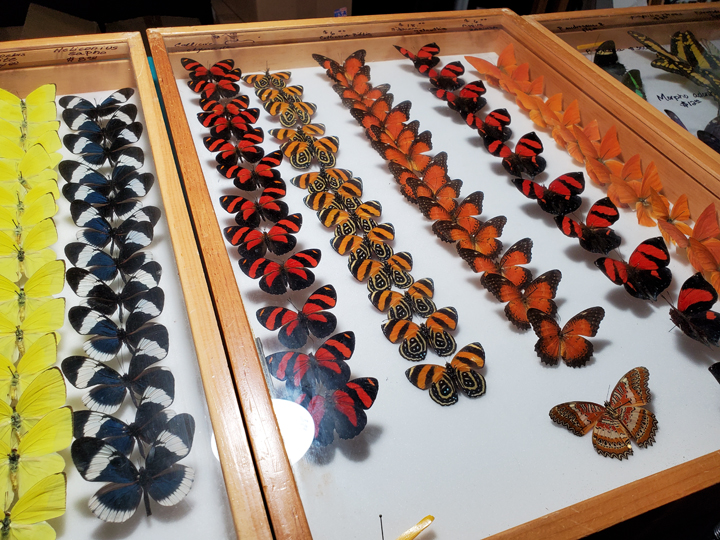
From carnivorous plants and tarantulas, to caterpillars, mounted butterflies, and much more, the annual Bug Fair at the Natural History Museum of Los Angeles County, held this year on the weekend of May 20-21, is an insect lovers delight. I try to go every year. Art and I spent the morning at the museum browsing the vendor booths and oohing and aahing at the spectacular displays, along with families with children and eager buyers adding to their own insect collections. 


When we finished we exited through the dinosaur galleries where we could look through the windows at the butterfly house outside below and see gorgeous live blue morpho butterflies fluttering among the plants. Tickets for the butterfly house were sold out so we didn't visit today, but I have enjoyed visiting before. 


Thursday, April 6, 2023

CELEBRATE THE EARTH at the April SCBWI Reading List with BUTTERFLIES IN ROOM 6


BUTTERFLIES IN ROOM 6
 is one of the books featured on the SCBWI reading list for the month of April. Hurray! The April theme is "Celebrate the Earth". What better way to celebrate the Earth than by watching caterpillars transform into beautiful butterflies!

You can find my book by looking in the nonfiction section of the reading list. 


Sunday, May 15, 2022

IT'S CATERPILLAR TIME! LEARN ABOUT PAINTED LADY BUTTERFLIES

Infographic from Carolina Biological Supply


Spring and summer are the perfect time to raise painted lady butterflies. This infographic from Carolina Biological Supply shows where they live and the four stages of life.

Cups of caterpillars from InsectLore. Everything the caterpillars need to grow is provided.

I just received my cups of caterpillars from InsectLore. The caterpillars (larva) will eat the special food at the bottom of the cups and in about two weeks form chrysalises. A week or so later they will emerge as beautiful butterflies.

Find out how a kindergarten class raised butterflies in their classroom and let them go in the school garden in my book BUTTERFLIES IN ROOM 6


Wednesday, March 24, 2021

Butterfly Craft with Yarn and Pipe Cleaners


With thanks to the Craft Train, here is an easy way to make decorative butterflies with yarn, craft sticks and pipe cleaners. https://www.thecrafttrain.com/woven-craft-stick-butterflies/

Learn about raising real butterflies in my book Butterflies in Room 6: See How They Grow


Wednesday, June 3, 2020

MILKWEED AND MONARCHS

Monarch butterfly on a milkweed plant in northern Wisconsin.
Look along a roadside, in a vacant lot, or in an abandoned country field, and you will probably see milkweed, a tall plant with broad leaves, thick stems and pink, yellow or purple flowers. If you look closely, you might find a monarch butterfly sipping nectar. Many insects make milkweed plants their home. They eat the nectar, sap, leaves, stems, roots, and seeds. You may also have milkweed plants, also called butterfly weed, in your garden.
Monarch caterpillar on a milkweed plant in my garden.
Milkweed gets its name from the white sap inside its stem. Poisonous chemicals are in the sap. Most plant-eating animals, such as cattle or deer, do not eat milkweed because it tastes bad. But monarch butterfly caterpillars are able to eat milkweed sap and the poison does not hurt them. A little bit of the poison becomes part of their bodies and helps protect them from birds and other predators. Predators learn to recognize monarchs by their distinctive black and orange colors and avoid them because they taste bad.

Female monarchs lay their eggs on milkweed leaves and when the eggs hatch, the tiny caterpillars eat the leaves. After a few weeks, when the caterpillars are about two inches long, they stop eating, attach themselves to a leaf and cover themselves with a green shell called a chrysalis. Inside the chrysalis, the caterpillar, now called a pupa, slowly transforms into a butterfly. After about two weeks, the beautiful butterfly emerges and the cycle of life begins again. (For a previous post with more about metamorphosis and a photo of a monarch chrysalis, click HERE.)
Milkweed pods in the fall. (Illustration by Caroline Arnold)
In the fall, monarch butterflies fly to their winter homes and milkweed flowers turn into seed pods. At first, the crescent shaped pods are soft and green. As the seeds grow inside the pod, the outside becomes hard and brown. When the seeds are ripe, the pod cracks open and the seeds spill out. The wind catches the the fluffy seeds and they are carried away, floating like tiny helicopters. Some of the seeds fall to the ground. In the following spring they will grow into new milkweed plants, providing homes for a new generation of monarchs.

Monarch butterflies depend on milkweed. In recent years, the disappearance of milkweed in many rural areas as a result of development has had a deleterious effect on monarch butterflies and their numbers have plummeted. You can learn about planting milkweed in your area to help monarch butterflies at this NWF website.

In my book, Butterflies in Room 6, about a kindergarten class raising painted lady butterflies, you can learn more about butterfly development.

For a fascinating article about the role of color as it relates to how well monarchs fly, click HERE.

Wednesday, June 5, 2019

LA CASA DELLE FARFALLE: Butterfly House in Palermo, Sicily

Since the publication of my book BUTTERFLIES IN ROOM 6, I have been much more aware of butterflies and how they can be observed in so many places. On my recent trip to Sicily, I was surprised and pleased to discover a butterfly "house" tucked away just off one of the main streets of the capital city of Palermo. (In Italian, a butterfly is a farfalle.)
We bought our tickets and went through the netted door. Inside the enclosed room, hundreds of tropical butterflies flew around in the warm moist air, resting on leaves and feeding on flowers. One kept landing on my husband's hat! A chart showed pictures of butterflies from America, Africa and Asia so that one could identify the butterflies that were flying around.
In one corner was a container of chrysalises suspended from a strip of foam. A few butterflies rested at the bottom as their wings dried. Soon more would emerge from their chrysalises. It was truly a butterfly heaven! Here are just a few of the many beautiful butterflies we saw.

Wednesday, May 15, 2019

AUTHOR VISIT IN ROOM 6, Haynes School, Los Angeles, CA

Releasing painted lady butterflies with students in Room 6
Yesterday I visited Mrs. Best and her students in Room 6 at Haynes School in Los Angeles. In March I had presented my new book BUTTERFLIES IN ROOM 6 to the whole school. This time I did a class visit.  Earlier this spring I had raised butterflies to take to my book signings to celebrate the publication of the book. Those butterflies laid eggs before I let them go, thus producing a second generation.
Painted Lady butterfly eggs, magnified. The actual size is about as big as a grain of salt.
By yesterday the new butterflies were ready to fly free. With the students in Room 6 I went out to the school garden and the children helped me let the butterflies go.
Butterflies drinking orange juice with their proboscises.
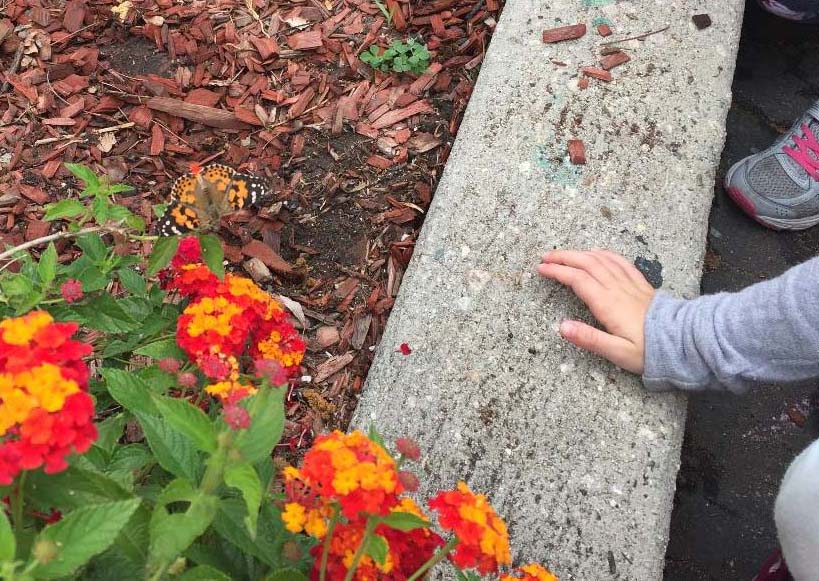
As I took the butterflies out of their netted enclosure, some sat for a few seconds on eager fingers. Then, whoosh, they flapped their wings and took off. Some flew over the fence and others landed on flowers in the garden.
Painted Lady butterfly resting near lantana flowers
After we went back inside I read my story THE TERRIBLE HODAG AND THE ANIMAL CATCHERS. Later, the students will create their own “mixed up animals.”
Reading THE TERRIBLE HODAG AND THE ANIMAL CATCHERS. The Hodag has the head of an ox, feet of a bear, back of a dinosaur and tail of an alligator.
We also talked about chickens and eggs and I shared my ostrich egg, comparing its size to a chicken egg. Sitting on a shelf at the front of the classroom was an incubator filled with chicken eggs. In about two weeks they will hatch. Meanwhile, the children can read my book HATCHING CHICKS IN ROOM 6, about a previous kindergarten class that hatched eggs with Mrs. Best.
Incubator with chicken eggs
I always enjoy visiting Room 6 and seeing all the amazing science projects that Mrs. Best is doing with her students. I thank her for taking the photos during my visit.

Wednesday, April 10, 2019

LITERACY NIGHT: SCIENCE EDITION at San Gabriel Avenue Elementary School, South Gate, CA

Mural at San Gabriel Avenue School Literacy Night: Science Edition
Last week on Friday, I was the guest of honor at the San Gabriel Avenue Elementary School in South Gate, California for their annual literacy night, this year focusing on science. Children and their families filled the school playground, exploring various booths with science exhibits, turning in their raffle tickets for free books, competing in the champion pinewood derby races, listening to music, and enjoying pizza and other snacks on picnic blankets and lawn chairs.
With fourth grade teacher Mr. De Santos
I had a table for my books behind the stage area where I displayed my books. As a backdrop there was a wonderful mural depicting scientists learning about caterpillars and butterflies just as the children do in my book, Butterflies in Room 6. The kindergarten classes at San Gabriel were also learning about butterflies and on another table their butterflies were on exhibit, sitting next to the incubator where they were hatching eggs. I enjoyed the chance to talk with children and their parents as they came to my table to look at and buy my books, peer through my magnifying glass, and get a closeup look at my ostrich egg.
View from my table of the crowd and DJ
At the end of the afternoon the San Gabriel Mighty Angels Dance Team performed to music and then I did a presentation, talking about my books and life as a writer. The final event was a drawing for prizes.
With teachers Lauren Cantu (left) and Cindy Taylor (right)
The whole afternoon was a wonderful celebration of literacy, with a special emphasis on science. I thank kindergarten teacher Cindia Curiel-Taylor for inviting me and the San Gabriel PTA for sponsoring my visit. Cindy did a great job of organizing and directing the activities and was helped by other teachers at the school. In the spirit of the day, all were wearing white scientific lab coats. I wore my butterfly t-shirt: "Soar into Reading with science books for kids!"

Saturday, March 23, 2019

BUTTERFLIES IN ROOM 6: Where Do Ideas Come From?

Jennifer Best, Kindergarten teacher at Haynes School for Enriched Studies
Several years ago, when I was doing an author visit at a school in Los Angeles, I met Jennifer Best, a kindergarten teacher. Each spring, her students learn about life cycles. Two years ago I spent time in her classroom while they were hatching chicken eggs in an incubator. That resulted in my book Hatching Chicks in Room 6. At the same time, the class was also raising Painted Lady butterflies from caterpillars, watching the caterpillars grow in a jar, turn into chrysalises, and, after a week or so, emerge as beautiful butterflies. It seemed like the perfect sequel to Hatching Chicks in Room 6.
As with the book about chicks, I realized that the best way to tell this story was with photographs. I had taken photographs for some of my other books, so I decided to do it myself. I embedded myself in Jennifer Best’s classroom, which enabled me to follow the process and get the photos I needed. (A challenge in taking the photographs was that neither the children nor butterflies stayed still for long!) Spending so much time in the classroom also allowed me to interact with the kindergarten students, which helped me to target my text at the right level. The children’s enthusiasm was contagious as they learned about butterflies and had the thrill of releasing them outdoors and watch them fly into the neighborhood. I am extremely grateful to Jennifer Best for her cheerful cooperation in this project and for being my expert reader. I couldn’t have done this book without her.
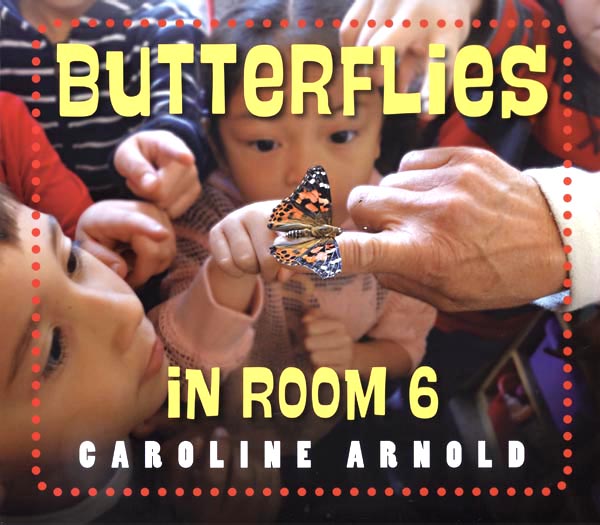
Butterflies in Room 6 is a book for primary age children about raising butterflies in the classroom. This photo essay follows the process of metamorphosis from a tiny egg, to caterpillar, to chrysalis, and finally to the emergence of the adult butterfly. Children observe each stage up close as they learn firsthand about a butterfly’s life cycle. Then, when the butterflies are a few days old, the children release them in the school garden.
Raising butterflies from caterpillars is a popular project at home and in school, with supplies easily available on the internet or at many museums and nature centers. The book includes scientific information that is written at a level understandable to young children. It is ideal to use with STEM or STEAM curriculums.

Sunday, March 17, 2019

Charlotte Huck Children’s Literature Festival, Redlands, California

The Charlotte S. Huck Children's Literature Festival is held every year at Redlands University, in California
A week ago, on March 8 and 9, I participated in the 23d Annual Charlotte S. Huck Children’s Literature Festival at the University of Redlands, in Redlands, California. This was my third time to be a speaker at the festival, an annual event that celebrates children’s books and is a wonderful opportunity for teachers and librarians to get together and have a chance to meet authors and other professionals in the field. Featured speakers this year were Joe Cepeda, Sharon Draper, Bethany Hegadus, Richard Michelson, Doreen Rappaport and Joyce Sidman–an impressive array of authors and illustrators. The Festival is chaired by Dr. Marjorie Arnett and a very hard working planning committee makes sure that everything runs smoothly.
Signing books at the Festival
At one of the Festival breakout sessions I gave a workshop called Butterflies and Chicks: Hands on Science in the Classroom. I worked with two classes at Ramona Alessandro School in San Bernardino, California, who had been reading my books. The classes completed writing and art projects in a unit they called “Feathers and Forests, Wings and Wombats, an author study of nature and animal books by Caroline Arnold."
Samples of art and writing projects by Ramona Alessandro students that were displayed at the Festival
Their teachers, Kristy Forsythe and Arlene Asuelime, had done a fantastic job with the children. The visit to the festival was coordinated by parent volunteer Stephanie McNairy. I thank them all for helping to make my session a special experience for all. Two weeks earlier I had had the pleasure of visiting the children in their classroom where I got to see their penguin projects and we talked about the other books in my black and white animal series. Both classes had a chance to act out the story of A Polar Bear's World. They had also read Hatching Chicks in Room 6. I was impressed by their art projects showing a chicken’s life cycle and the stories they wrote to go with them. At my workshop session I shared my new book Butterflies in Room 6.

One of the special parts of the festival for me was meeting Joyce Sidman, who has a new book called The Girl Who Drew Butterflies, How Maria Merian’s Art Changed Science. Her book, meant for older readers than my butterfly book, is the fascinating story of a young woman who was the first to understand the process of metamorphosis. Like me, Joyce Sidman raised her own painted lady butterflies while she was working on her book so she could see the process up close.
Joyce Sidman, Author
I always enjoy going to the Charlotte Huck Festival and find it inspiring on so many levels. This was another great year! Thank you, Marjorie, for inviting me!
Dr. Marjorie Arnett, Chair of the Charlotte Huck Children's Literature Festival

Thursday, January 10, 2019

Booklist Advance Review of BUTTERFLIES IN ROOM 6

I am delighted with this very positive review of my new book, Butterflies in Room 6, published by Booklist, the journal of the American Library Association. The official publication date of the book is March 12, 2019. Look for it in your bookstore!

Butterflies in Room 6
By Caroline Arnold. Illus. by the author
Mar. 2019. 40p. Charlesbridge, $16.99 (9781580898942). PreS–Gr. 3. 638

In this attractive science book, writer and photographer Arnold presents the life cycle of a butterfly as observed in a Los Angeles kindergarten classroom. The teacher brings tiny painted lady butterfly eggs to school and places them in a box with food. As the eggs hatch, the caterpillars crawl, eat, and climb to the top of their containers, where they enter the pupal stage within chrysalises. Transferred to a large netwalled enclosure, they begin to emerge eight days later as butterflies. Outdoors, each one crawls onto a child’s finger, rests, and then flies away. Arnold comments on each step of caring for the animals, as well as each stage of their life cycle. Along the way, she provides just enough information and detail for young children who want to know more. It’s enlightening to observe the butterflies' stages of life in the clear, color photos, but it’s also a pleasure to see the children’s reactions: curiosity, caution, rapt attention, surprise, excitement, and joy. An appended page answers pertinent questions. An amiable, eye-opening introduction to metamorphosis.
— Carolyn Phelan

Wednesday, August 1, 2018

KIDS ART ACTIVITY: Inspired by “Butterfly” Compositions by Mark Grotjahn at LACMA

Paintings by Mark Grotjahn at LACMA
An interesting contrast to the David Hockney portraits at the Broad Contemporary Art Museum at LACMA is the exhibit in the adjacent gallery of “butterfly” or starburst compositions by Mark Grotjahn. (The actual name of the show is 50 Kitchens–see below.) The colorful paintings, all the same size and with a similar design, are mounted on stark white walls–as opposed to the pomegranate red walls of the Hockney show. Each of the Grotjahn paintings explores a different combination of colors. And when you get close you can see speckles of other colors peeking through.
Choosing favorite colors
On the Sunday afternoon that I visited, two groups of kids were doing activities related to the paintings. After choosing the paintings with their favorite colors, they gathered on the floor with paper, rulers and colored pencils to create their own butterfly designs. As you look at each painting the two halves are mirrors of each other, just like a pair of butterfly wings! It looked like a fun project–for kids or adults!
This painting is symmetrical on the horizontal axis; others are on the vertical axis.

The exhibit ends August 19, 2018.

Los Angeles-based artist Mark Grotjahn (b. 1968) has made “Butterfly” compositions since 2002, and the latest to come out of his studio is 50 Kitchens (2013–18), exhibited here for the first time. Conceived as one work, 50 Kitchens takes its inspiration from a single composition (in black and cream-colored pencil) that Grotjahn made to meet the dimensional specifications of a wall in his kitchen. The more than 50 subsequent chromatic drawings explore pairs of radiating colors (like Tuscan Red and Chartreuse, or Grass Green and Canary Yellow) and together create a prismatic display. The works allude to artists interested in color, light, and optics, such as Wassily Kandinsky and the Op art painters of the 1960s, and also incorporate residual traces of earlier drawings that have been seamlessly integrated into the new works.