Showing posts with label chrysalis. Show all posts

Sunday, May 15, 2022

IT'S CATERPILLAR TIME! LEARN ABOUT PAINTED LADY BUTTERFLIES

Infographic from Carolina Biological Supply


Spring and summer are the perfect time to raise painted lady butterflies. This infographic from Carolina Biological Supply shows where they live and the four stages of life.

Cups of caterpillars from InsectLore. Everything the caterpillars need to grow is provided.

I just received my cups of caterpillars from InsectLore. The caterpillars (larva) will eat the special food at the bottom of the cups and in about two weeks form chrysalises. A week or so later they will emerge as beautiful butterflies.

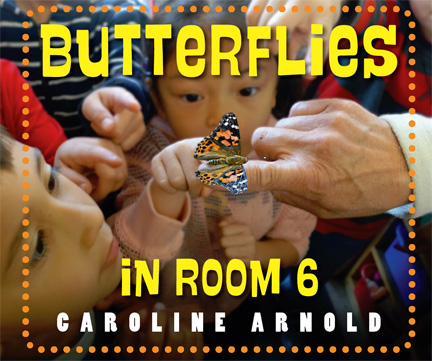
Find out how a kindergarten class raised butterflies in their classroom and let them go in the school garden in my book BUTTERFLIES IN ROOM 6. 


Tuesday, July 23, 2019

Raising Painted Lady Butterflies from Caterpillars

It is not hard to raise painted lady butterflies at home or in the classroom. You do not need to start with eggs. Most people raise butterflies from caterpillars. There are a number of sources on the internet where you can order painted lady caterpillars. (I ordered mine from InsectLore and also bought a netted habitat for keeping the butterflies after they emerged from their chrysalises.) The tiny caterpillars come in a plastic cup, a supply of food, and directions for care. It usually takes about three weeks for the caterpillars to grow, form a chrysalis, and transform into butterflies.
If you find a painted lady caterpillar on a wild thistle plant or on a hollyhock leaf, you may be able to watch it grow by feeding it fresh leaves every day. The butterfly will emerge about 8-10 days after it forms the chrysalis. Within a few days after the butterfly emerges, you should release it so it can live in the wild.

Saturday, March 23, 2019

BUTTERFLIES IN ROOM 6: Where Do Ideas Come From?

Jennifer Best, Kindergarten teacher at Haynes School for Enriched Studies
Several years ago, when I was doing an author visit at a school in Los Angeles, I met Jennifer Best, a kindergarten teacher. Each spring, her students learn about life cycles. Two years ago I spent time in her classroom while they were hatching chicken eggs in an incubator. That resulted in my book Hatching Chicks in Room 6. At the same time, the class was also raising Painted Lady butterflies from caterpillars, watching the caterpillars grow in a jar, turn into chrysalises, and, after a week or so, emerge as beautiful butterflies. It seemed like the perfect sequel to Hatching Chicks in Room 6.
As with the book about chicks, I realized that the best way to tell this story was with photographs. I had taken photographs for some of my other books, so I decided to do it myself. I embedded myself in Jennifer Best’s classroom, which enabled me to follow the process and get the photos I needed. (A challenge in taking the photographs was that neither the children nor butterflies stayed still for long!) Spending so much time in the classroom also allowed me to interact with the kindergarten students, which helped me to target my text at the right level. The children’s enthusiasm was contagious as they learned about butterflies and had the thrill of releasing them outdoors and watch them fly into the neighborhood. I am extremely grateful to Jennifer Best for her cheerful cooperation in this project and for being my expert reader. I couldn’t have done this book without her.
Butterflies in Room 6 is a book for primary age children about raising butterflies in the classroom. This photo essay follows the process of metamorphosis from a tiny egg, to caterpillar, to chrysalis, and finally to the emergence of the adult butterfly. Children observe each stage up close as they learn firsthand about a butterfly’s life cycle. Then, when the butterflies are a few days old, the children release them in the school garden.
Raising butterflies from caterpillars is a popular project at home and in school, with supplies easily available on the internet or at many museums and nature centers. The book includes scientific information that is written at a level understandable to young children. It is ideal to use with STEM or STEAM curriculums.

Tuesday, March 12, 2019

HOORAY! It’s Publication Day for BUTTERFLIES IN ROOM 6

HOORAY! Today is the official publication day for BUTTERFLIES IN ROOM 6, my new book about a kindergarten class raising painted lady butterflies. BUTTERFLIES IN ROOM 6 follows a class of kindergartners as they raise butterflies--from tiny eggs, to caterpillars, to chrysalises, to beautiful butterflies, before releasing them in the school garden. 
I thank all the people at Charlesbridge Publishing who helped make this such a terrific book–my wonderful editor Alyssa Pusey, Susan, Joyce and Sarah for the book design, Yolanda, Karen, Julie, Diane, Cathy and everyone else who contributed to making this such a special book.
I couldn’t have written BUTTERFLIES IN ROOM 6 without the help of Jennifer Best and her kindergarten students at Haynes Charter for Enriched Studies in Los Angeles, California. I thank them for welcoming me into their classroom and for sharing the wonder of metamorphosis with me. Their excitement was contagious as they watched the caterpillars transform into beautiful butterflies. I am also grateful to the children’s parents and the school principal, Barbara Meade, for their enthusiastic support.
It was great to work with Jennifer Best again. Two years ago I followed her class as they hatched eggs and learned about the life cycle of chickens. That experience became my book HATCHING CHICKS IN ROOM 6. Now we have a sequel! I am excited that it is now available to the public. Look for it at your favorite bookstore or online.

BUTTERFLIES IN ROOM 6

Thursday, January 10, 2019

Booklist Advance Review of BUTTERFLIES IN ROOM 6

I am delighted with this very positive review of my new book, Butterflies in Room 6, published by Booklist, the journal of the American Library Association. The official publication date of the book is March 12, 2019. Look for it in your bookstore!

Butterflies in Room 6
By Caroline Arnold. Illus. by the author
Mar. 2019. 40p. Charlesbridge, $16.99 (9781580898942). PreS–Gr. 3. 638

In this attractive science book, writer and photographer Arnold presents the life cycle of a butterfly as observed in a Los Angeles kindergarten classroom. The teacher brings tiny painted lady butterfly eggs to school and places them in a box with food. As the eggs hatch, the caterpillars crawl, eat, and climb to the top of their containers, where they enter the pupal stage within chrysalises. Transferred to a large netwalled enclosure, they begin to emerge eight days later as butterflies. Outdoors, each one crawls onto a child’s finger, rests, and then flies away. Arnold comments on each step of caring for the animals, as well as each stage of their life cycle. Along the way, she provides just enough information and detail for young children who want to know more. It’s enlightening to observe the butterflies' stages of life in the clear, color photos, but it’s also a pleasure to see the children’s reactions: curiosity, caution, rapt attention, surprise, excitement, and joy. An appended page answers pertinent questions. An amiable, eye-opening introduction to metamorphosis.
— Carolyn Phelan

Wednesday, September 2, 2015

PROJECT: Butterfly Life Cycle with Pasta

A butterfly’s life cycle begins with an egg, which hatches into a caterpillar, which develops into a chrysalis and then metamorphosizes into a butterfly. You can observe all of these stages if you hatch painted lady butterflies in your classroom. And the perfect art project to illustrate the stages can be done with a paper plate and pasta.

You will need:
  • A paper plate
  • 4 types of pasta: bulgar for eggs; ziti for the caterpillars; shells for the chrysalis; and bowties for the butterflies
  • Glue
  • Markers, paint or crayons
Directions:
  • Make an “X” across the paper plate to divide it into four sections.
  • Label each section with a butterfly stage: egg, caterpillar, chrysalis, butterfly
  • Glue the appropriate pasta in each section. Draw or paint leaves. Color the pasta if desired.
I thank Jennifer Best for sharing this project with me. Her kindergarten students at Haynes Center for Enriched Studies did this project when they were learning about insects.
Painted Lady Caterpillars