Last Friday I joined hundreds of other card-carrying demonstrators at the Federal Building in West Los Angeles to protest the cuts being made to NIH and other federal institutions. This was one of dozens of demonstrations held in cities across the United States. My card, saved from the March for Science in Washington, D.C. in 2017, had two sides:
Monday, March 10, 2025
STAND UP FOR SCIENCE: We Need STEM and STEAM! March in Los Angeles 2025
Last Friday I joined hundreds of other card-carrying demonstrators at the Federal Building in West Los Angeles to protest the cuts being made to NIH and other federal institutions. This was one of dozens of demonstrations held in cities across the United States. My card, saved from the March for Science in Washington, D.C. in 2017, had two sides:
Wednesday, April 17, 2024
LITLINKS GUEST POST: Our Warming Earth, Sea Ice and Krill
![]() |
| Lit Links: An Easy Way to Find Out How Baleen Whales Eat |
Thursday, April 6, 2023
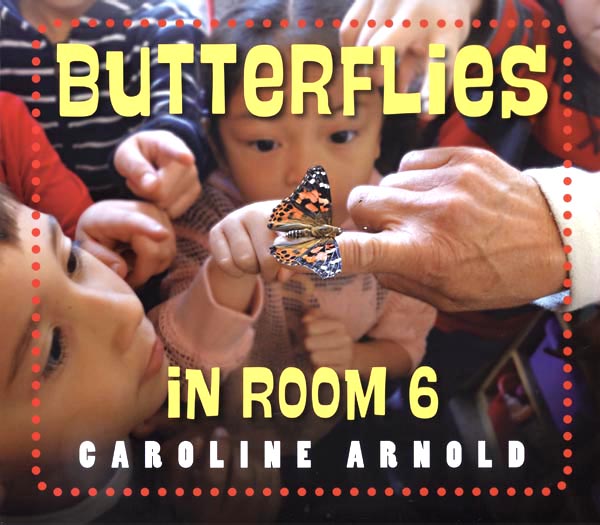
CELEBRATE THE EARTH at the April SCBWI Reading List with BUTTERFLIES IN ROOM 6
BUTTERFLIES IN ROOM 6 is one of the books featured on the SCBWI reading list for the month of April. Hurray! The April theme is "Celebrate the Earth". What better way to celebrate the Earth than by watching caterpillars transform into beautiful butterflies!
You can find my book by looking in the nonfiction section of the reading list.
Wednesday, August 31, 2022
LITLINKS GUEST POST: Watching the Weather and Keeping a Log
What would it be like to be a lighthouse keeper--as a woman, alone, on an island in San Francisco Bay?
This week at LitLinks you can find my article about how you can use my new book KEEPER OF THE LIGHT: Juliet Fish Nichols Fights the San Francisco Fog in connection with reading and STEAM activities. I am happy to contribute to Author/Speaker Patricia Newman's wonderful blog featuring ways to connect STEM and STEAM books with literature in the classroom. My article features hands-on activities and reading strategies for using my book with students, helping them understand the concepts in the book. It posted on August 31, 2022 , joining dozens of previous posts by other children's book science writers and illustrators.Many thanks, Patricia, for the opportunity to contribute to your terrific site!
Thursday, April 7, 2022
CELEBRATING PLANTING A GARDEN IN ROOM 6 at HAYNES SCHOOL, Los Angeles, CA
![]() |
| Caroline with Jennifer Best, Haynes Center for Enriched Studies, Los Angeles, CA |
Monday was the Big Day, celebrating the publication of PLANTING A GARDEN IN ROOM 6: From Seeds to Salad with Mrs. Best and the children in her 2019-2020 kindergarten class at Haynes School in Los Angeles, who are pictured in the book. The kids are now in second grade! At a special program in the school auditorium (my first in person school event in two years!) with all the second graders and Mrs. Best's current kindergarten class, I presented Mrs. Best with a hat and mug along with her book.Then I presented each child from Mrs. Best's class with their own autographed book. It was wonderful to see the happy looks on their faces! For the occasion I wore my new vegetable t-shirt!
![]() |
| My book Wiggle and Waggle is the perfect companion book for Planting a Garden in Room 6 |
Before presenting the books I did a short author talk (which included singing the Wiggle and Waggle song with my sock puppets) and read the book. The kids then had a chance to ask questions and make comments before the book presentation. My favorite: "The vegetables we grew are my favorite vegetables to eat!"
I was surprised to see how much the kids had grown. Some are almost as tall as I am!
I am so glad that the book is finally out and I am able to promote it. Thank you Mrs. Best and all the students for sharing your gardening experience with me and being part of the book. And a special thanks to Barbara Meade, the school principal for your support and enthusiasm for the project!
Wednesday, March 23, 2022
GUEST POST AT LITLINKS: Plant a Garden, Grow a Reader!
| Guest post at Lit Links, March 16, 2022 |
How does a school garden sprout young readers? Find out in 4 easy lessons! This week at LitLinks you can find my article about how you can use my new book Planting a Garden in Room 6: From Seeds to Salad in connection with reading and STEAM activities. I am happy to contribute to Author/Speaker Patricia Newman's wonderful blog featuring ways to connect STEM and STEAM books with literature in the classroom. My article features hands-on activities and reading strategies for using my book with students, helping them understand the concepts in the book. It posted on March 16, joining dozens of previous posts by other children's book science writers and illustrators.Many thanks, Patricia, for the opportunity to contribute to your terrific site!
Wednesday, September 16, 2020
LITLINKS: Kids See Chicks Hatch with their Own Eyes, Guest Post at Patricia Newman's Blog
Thanks Patricia for the opportunity to contribute to your terrific site!
Wednesday, July 22, 2020
THE GEOGRAPHY BOOK: Perfect for Stay at Home Fun STEAM Activities
From finding directions by the stars, to mapping your neighborhood,to making an earthquake in a box, you'll have a great time learning about the world with The Geography Book. You'll find out how to determine location on the Earth, how maps can provide us with a wide range of information, how different land forms were created,how water has helped shape the Earth, and much more.
Using simple materials you'll be able to find around the house or in your neighborhood, you'll be able to create things like a giant compass rose, a balloon globe, a contour potato, a map puzzle, and a tornado in a jar. So get ready for a fascinating trip around the globe. (Amazon)
The Geography Book: Activities for Exploring Your World (Wiley, 2001), my book for children that is filled with projects related to learning about geography and earth science, has been selling steadily for almost twenty years and is especially popular with home schoolers. Now, at a time when many children are at home and doing distance learning, this is the perfect book to have on hand to inspire fun projects that can be done with easily available supplies.
Here are a few samples of projects in the book:
![]() |
| Project: The Salty Sea: Making Salt Crystals |
![]() |
| Project: Time Zones of the World, Make a "World Clock" |
![]() |
| Project: Icebergs and Sea Level |
Wednesday, July 8, 2020
STEAM Activity: Which came first, the chicken or the egg?
There are many ways to illustrate the repeating process of a chicken's life cycle. In one classroom of second graders at a school in California, the children made a mixed media presentation using packing material to represent the chicken’s nest, real feathers on the growing chick, a hand-print to make an adult chicken, markers for drawing, and googly eyes for all. With black arrows indicating the circular process, it is a dramatic and colorful presentation.
To do this project you will need:
White poster board or heavy paper cut into a large egg shape.
White paper for the eggs.
Yellow paper for the chick.
Colored markers.
Googly eyes.
Feathers.
Packing material for nest.
Red poster paint.
Use the picture above as a guide.
Have fun!
Learn about a chicken's life cycle in my book HATCHING CHICKS IN ROOM 6.
Wednesday, July 1, 2020
STEAM Project: The Egg is Hatching!
You will need:
Yellow construction paper, about 12 by 18 inches.
Brown construction paper, about 12 by 18 inches.
A small piece of orange construction paper, about 4 inches square.
Pencil.
Scissors.
Glue.
Black marker.
1. Draw a large egg shape on the yellow paper. Cut it out. Use the pencil to trace around it to make another egg shape on the brown paper. Cut it out. Make a small hole in the middle of the brown paper.
2. Spread glue around the edge of the yellow egg. Put the brown egg on top and press to fasten the two pieces of paper together.
3. Carefully tear the paper around the hole, pulling the pieces back to reveal the yellow paper underneath.
4. Use the marker to draw two black eyes.
5. Fold the orange paper in half to make a triangle. Fold under two corners and glue on to make a beak.
Your chick is ready to hatch!
Wednesday, April 15, 2020
Projects for Kids: A GARDEN IN YOUR KITCHEN, Birdseed
![]() |
| Bird feeder filled with seeds |
Birdseed
If you have a pet bird or a bird feeder for wild birds, you can try growing birdseed. Plant your birdseed in a pot filled with potting soil. The small, round seeds are millet. Sunflower seeds, if planted outdoors, will grow into plants much taller than you are.
Here is another way you can watch your birdseed sprout. Fill a shallow tray or the top of an egg carton with vermiculite. (You can get this at a garden store.) Sprinkle it with birdseed, and water it. Then cover it with plastic wrap. This keeps the moisture inside so the seeds won’t dry out. In a few days you will see your seeds begin to sprout. Then remove the plastic.
Each seed has food inside it for a new plant to grow. But after a few days the plant uses that up. Then it needs to get nutrients from the soil so it can make its own food with sunlight and the chlorophyll in its leaves. When your birdseed plants are the size of a matchstick, transplant them into a pot with dirt or into your garden outside.
You can experiment with other seeds and plants around your house. It’s fun to discover how things grow–and you’ll end up with a beautiful garden in your kitchen!
Look for all the kitchen garden projects in these posts:
Dried Beans and Peas 3/25/20
Fresh Vegetable Seeds 4/1/20
Herbs and Spices 4/8/20
Birdseed 4/15/20
Citrus Fruits 4/22/20
Carrots 4/29/20
Pineapple 5/6/20
Avocados 5/13/20
Monday, October 28, 2019
AAAS/Subaru SB&F Prize for Excellence in Science Books
Wednesday, July 17, 2019
Review of BUTTERFLIES IN ROOM 6 at the Mom Read It Blog
Mom Read It (blog) March 7, 2019
Spring is getting closer and closer, and that means that science classrooms all over the place are going to introduce their little ones to the life cycle of a caterpillar/butterfly. We’ve done it in my home, and each of my kids has done it in school, and it’s exciting every time. Butterflies in Room 6 revisits the Kindergarten students of Room 6 – a new group, since Hatching Chicks in Room 6 was published in 2017 – as they raise butterflies, starting from teeny, tiny caterpillar eggs.
Full-color photographs and informative text take this STEM/STEAM story through the step-by-step process by which the class observed and cared for their caterpillars; feeding them, observing the stages of life, moving the chrysalises to a larger, netted environment, the exciting emergence of the painted lady butterflies from their cocoons, and their release into the world! Leaf-shaped callouts throughout the book provide additional caterpillar and butterfly facts, and back matter provides butterfly questions, vocabulary, and a nice list of online and print resources for further reading.
Butterflies in Room 6 brings a real-world look into a primary classroom – it’ll get kids excited about science, especially if this is one of your classroom projects. Pair this with The Very Hungry Caterpillar and the classic that my kids all read in their kindergarten classes, Deborah Heiligman’s From Caterpillar to Butterfly.
By Librarian Rosemary Kiliditas
Wednesday, May 1, 2019
CELEBRATING EARTH WEEK, Author Visit at Pilgrim School, Los Angeles, CA
![]() |
| Author Visit at Pilgrim School, Los Angeles, CA |
![]() |
| Kathie Shorkey, Science Teacher, with butterfly art projects |
My visit was initiated by science teacher Kathie Shorkey as part of her Earth Week celebration at the school. She showed me an art project she did with the first graders. Using found objects–ranging from sticks, to buttons, to pop-tabs from drink cans–they formed the shape of a butterfly on photo paper and then exposed the paper to the sun. The paper was then developed and the shape of the butterfly was revealed against a background of blue.
![]() |
| With Carole Koneff, Elementary School Librarian |
I thank Kathie and Elementary School Librarian Carole Koneff for inviting me to Pilgrim and making all the arrangements for my presentation and for the book sale. Carole gets the prize for the most creative author introductions. She does them for all visiting authors and this is the second one she has done for me. I love the way she has included so many of my books--and made the lines rhyme!
Thank you Carole! I also thank the Upper School Librarian Kris Williams for her help with my visit. I had a nice lunch with Carole and Kris before my talks. I had a great day at Pilgrim and enjoyed it very much!
Wednesday, January 25, 2017
PUBLICATION PARTY AT HAYNES SCHOOL for Hatching Chicks in Room 6
![]() |
| Lollipops to Celebrate the Publication of Hatching Chicks in Room 6 |
![]() |
| Welcome Banner in Auditorium |
![]() |
| Caroline, Mrs. Best, and students with their new books |
yellow, pink, or blue chick. To my surprise, the pink and blue chicks were
just as popular as the yellow ones. (I ordered the lollipops on the
internet.)
![]() |
| Chick cupcakes to celebrate |
provided cupcakes decorated to look like chicks. (I bought the candy eyes
and beaks at a local cake decorating shop.) We also had some healthier
food--fruit, cheese, crackers and veggie sticks--and by the end of the party
all the food was completely gone.
![]() |
| Mrs. Best sharing the book with some of her students |
photos how much they have grown! They were thrilled to get the books and so
were their parents. Almost all the children who are in the book came to the party, even
several who had moved to other schools.
I am excited about promoting this book and pleased with all the good
reviews. I noticed on Amazon that it is number one in Hot New Releases
for Children's Science Experiment Books.
I thank Jennifer Best, her kindergarten students of 2014-15, their families, and everyone at Charlesbridge for helping to make this a great book!