Showing posts with label painted lady. Show all posts

Sunday, May 15, 2022

IT'S CATERPILLAR TIME! LEARN ABOUT PAINTED LADY BUTTERFLIES

Infographic from Carolina Biological Supply


Spring and summer are the perfect time to raise painted lady butterflies. This infographic from Carolina Biological Supply shows where they live and the four stages of life.

Cups of caterpillars from InsectLore. Everything the caterpillars need to grow is provided.

I just received my cups of caterpillars from InsectLore. The caterpillars (larva) will eat the special food at the bottom of the cups and in about two weeks form chrysalises. A week or so later they will emerge as beautiful butterflies.

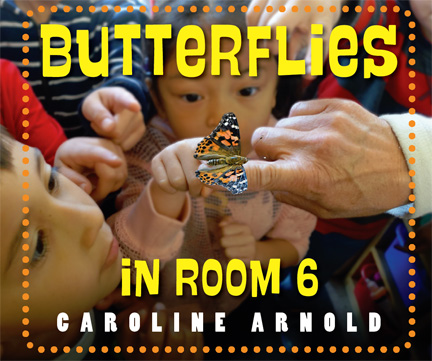
Find out how a kindergarten class raised butterflies in their classroom and let them go in the school garden in my book BUTTERFLIES IN ROOM 6


Monday, April 26, 2021

HOW MANY LEGS ON YOUR BUTTERFLY?


Like most insects, all butterflies have six legs. However, at first glance your Painted Lady Butterflies may only look like they have four! The Painted Lady butterfly, like many other butterflies in the family Nymphalidae has two more legs that are tucked up tight against its body, just beneath the head. These are known as "vestigial" legs. Nymphalidae or "brush-footed" butterflies are known to have these two vestigial legs in addition to their four normal ones. This doesn't mean that these two legs are useless, however: many species including the Painted Lady have sensory hairs on these legs which help them smell and taste!

With thanks for this information from The Butterfly Pollinator, the online newsletter of Insect Lore.

You can order caterpillars from Insect Lore and raise your own painted lady butterflies. 

Learn about raising painted lady butterflies in my book Butterflies in Room 6.


Wednesday, September 25, 2019

BEDTIME STORY JAM: Author Visit at Westwood Elementary School, Los Angeles, CA

Banner displaying participating authors' books welcomed families to the Bedtime Story Jam
Last Friday evening the children of Westwood Charter Elementary in Los Angeles, California, came to school dressed in their pajamas ready to listen to stories from me and nine other children’s book authors as part of the school's annual Bedtime Story Jam. The goal of the event is promoting literacy and inspiring young story tellers and writers. In between sessions the children ate milk and cookies and browsed for books at the book fair in the library.
My presentation of Butterflies in Room 6 was in Room 4
This was my third time to participate in this fun celebration of reading. I had two groups of very enthusiastic children and their parents in my room. I showed slides, read my book Butterflies in Room 6, shared my butterfly growing supplies and samples of butterfly eggs and chrysalises, and signed books.
My butterfly habitat, caterpillar container, and samples showing butterfly development
I thank Shelby, my volunteer room host, for helping me to set up, introducing me, and for making sure that everything ran smoothly. Shelby’s aunt, who I have known for many years at the library at Palms Middle School, was also there and it was great to catch up on library news.
A young helper is demonstrating my Monarch Butterfly hand puppet.
I also thank Angie Rowe and Patricia Maynard and the Bedtime Story Jam committee for inviting me and organizing this festive event. Afterward they sponsored a reception on the library patio for the authors-- a wonderful chance to relax, chat with other authors and enjoy delicious food. And I thank Mrs. Nelson’s Book Fair Company for supplying my books for the event. I was pleased to see that so many had already been purchased by the night of the Story Jam.
Bedtime Story Jam banner
During the course of the evening I saw several families I knew and enjoyed meeting many other students and parents. Westwood Charter is one of my neighborhood schools and it is always a pleasure to be part of a local event.

Wednesday, August 7, 2019

WHAT IS A CHRYSALIS? Learning about Butterflies

Chrysalis of a Painted Lady butterfly, just before the butterfly is ready to emerge. The caterpillar's shed skin is still attached at the top.
A butterfly has four stages of life-- egg, caterpillar, pupa, and butterfly. The pupa is covered by a hard shell called a chrysalis. It protects the pupa as the pupa changes, or metamorphosizes, into a butterfly.

How do you pronounce chrysalis?
(KRIS-uh-lis)
What is the plural of chrysalis?
More than one chrysalis is chrysalises or chrysalides (kri-SAL-i-deez)

What is the origin of the word chrysalis?
It comes from the Latin word chrysallis which means gold-colored pupa of a butterfly and from the Greek word khrusos which means gold.
Monarch butterfly emerging from its chrysalis (at the Museum of Natural Sciences, Raleigh, NC)
Each kind of butterfly has a different color and shape to its chrysalis.The chrysalis of the monarch butterfly has a ring of gold colored spots that make it look like it is wearing a gold necklace. Perhaps a chrysalis like that inspired the name.
Empty chrysalis, after the Painted Lady butterfly has emerged.
In my book, BUTTERFLIES IN ROOM 6, you can see the chrysalises of painted lady butterflies. They are brown. But the butterflies that emerge have beautiful black and orange wings.

Wednesday, July 31, 2019

STEM Friday #Kidlit Butterflies in Room 6 and Painted Lady Migrations

I recently found this enthusiastic review of Butterflies in Room 6 on the STEM Friday #Kidlit blog. I love the last sentence! Thank you for your support!
Go to the blog for a great video of the butterfly migration and a list of terrific projects.

Painted lady butterflies are in the news this week. First of all, they are migrating in huge numbers in southern California. The numbers of painted ladies are higher this year because of seasonal rains that caused a flush of their food plants. Here in Arizona we have seen smaller numbers of painted ladies migrating in both February and fall.If you'd like to see how to identify these butterflies, learn more about their migrations, and/or participate in a citizen science project, visit the Red Admiral and Painted Lady Research Site at Iowa State University.

With perfect timing the fabulous new picture book that showcases the life cycle of painted ladies for the youngest readers,
Butterflies in Room 6: See How They Grow by Caroline Arnold, also emerged on March 12, 2019. Caroline Arnold is both the author and photographer for the book and she has captured some fun and incredible images of both the insects and the children. Her 2017 book with a similar format, Hatching Chicks in Room 6, was a winner of the Cybils Award for Elementary Nonfiction. Back matter includes answers to questions about butterflies, a vocabulary list, links to butterfly information online and suggestions for further reading about butterflies. Butterflies in Room 6 is a must have to accompany a unit on insects or project raising painted lady butterflies. Fly out and get a copy today! By Roberta, March 15, 2019


Wednesday, May 15, 2019

AUTHOR VISIT IN ROOM 6, Haynes School, Los Angeles, CA

Releasing painted lady butterflies with students in Room 6
Yesterday I visited Mrs. Best and her students in Room 6 at Haynes School in Los Angeles. In March I had presented my new book BUTTERFLIES IN ROOM 6 to the whole school. This time I did a class visit.  Earlier this spring I had raised butterflies to take to my book signings to celebrate the publication of the book. Those butterflies laid eggs before I let them go, thus producing a second generation.
Painted Lady butterfly eggs, magnified. The actual size is about as big as a grain of salt.
By yesterday the new butterflies were ready to fly free. With the students in Room 6 I went out to the school garden and the children helped me let the butterflies go.
Butterflies drinking orange juice with their proboscises.
As I took the butterflies out of their netted enclosure, some sat for a few seconds on eager fingers. Then, whoosh, they flapped their wings and took off. Some flew over the fence and others landed on flowers in the garden.
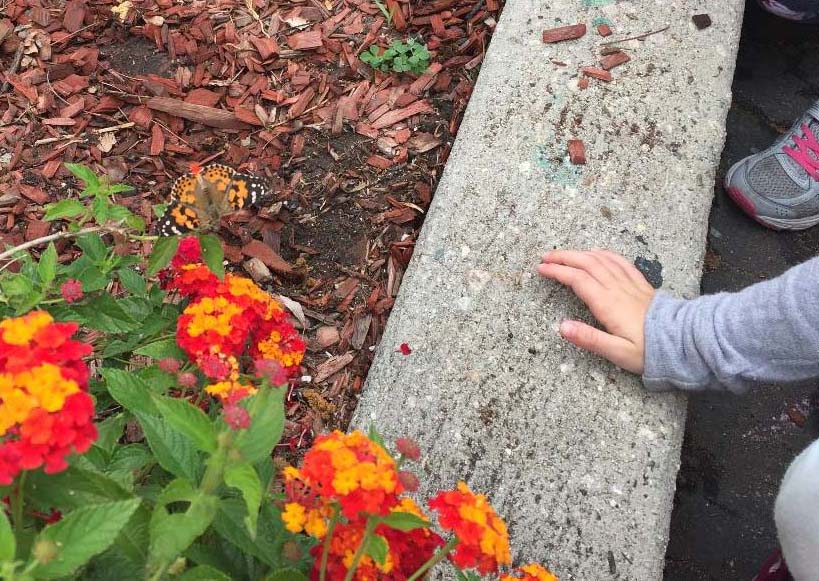
Painted Lady butterfly resting near lantana flowers
After we went back inside I read my story THE TERRIBLE HODAG AND THE ANIMAL CATCHERS. Later, the students will create their own “mixed up animals.”
Reading THE TERRIBLE HODAG AND THE ANIMAL CATCHERS. The Hodag has the head of an ox, feet of a bear, back of a dinosaur and tail of an alligator.
We also talked about chickens and eggs and I shared my ostrich egg, comparing its size to a chicken egg. Sitting on a shelf at the front of the classroom was an incubator filled with chicken eggs. In about two weeks they will hatch. Meanwhile, the children can read my book HATCHING CHICKS IN ROOM 6, about a previous kindergarten class that hatched eggs with Mrs. Best.
Incubator with chicken eggs
I always enjoy visiting Room 6 and seeing all the amazing science projects that Mrs. Best is doing with her students. I thank her for taking the photos during my visit.

Saturday, March 23, 2019

BUTTERFLIES IN ROOM 6: Where Do Ideas Come From?

Jennifer Best, Kindergarten teacher at Haynes School for Enriched Studies
Several years ago, when I was doing an author visit at a school in Los Angeles, I met Jennifer Best, a kindergarten teacher. Each spring, her students learn about life cycles. Two years ago I spent time in her classroom while they were hatching chicken eggs in an incubator. That resulted in my book Hatching Chicks in Room 6. At the same time, the class was also raising Painted Lady butterflies from caterpillars, watching the caterpillars grow in a jar, turn into chrysalises, and, after a week or so, emerge as beautiful butterflies. It seemed like the perfect sequel to Hatching Chicks in Room 6.
As with the book about chicks, I realized that the best way to tell this story was with photographs. I had taken photographs for some of my other books, so I decided to do it myself. I embedded myself in Jennifer Best’s classroom, which enabled me to follow the process and get the photos I needed. (A challenge in taking the photographs was that neither the children nor butterflies stayed still for long!) Spending so much time in the classroom also allowed me to interact with the kindergarten students, which helped me to target my text at the right level. The children’s enthusiasm was contagious as they learned about butterflies and had the thrill of releasing them outdoors and watch them fly into the neighborhood. I am extremely grateful to Jennifer Best for her cheerful cooperation in this project and for being my expert reader. I couldn’t have done this book without her.
Butterflies in Room 6 is a book for primary age children about raising butterflies in the classroom. This photo essay follows the process of metamorphosis from a tiny egg, to caterpillar, to chrysalis, and finally to the emergence of the adult butterfly. Children observe each stage up close as they learn firsthand about a butterfly’s life cycle. Then, when the butterflies are a few days old, the children release them in the school garden.
Raising butterflies from caterpillars is a popular project at home and in school, with supplies easily available on the internet or at many museums and nature centers. The book includes scientific information that is written at a level understandable to young children. It is ideal to use with STEM or STEAM curriculums.

Thursday, January 10, 2019

Booklist Advance Review of BUTTERFLIES IN ROOM 6

I am delighted with this very positive review of my new book, Butterflies in Room 6, published by Booklist, the journal of the American Library Association. The official publication date of the book is March 12, 2019. Look for it in your bookstore!

Butterflies in Room 6
By Caroline Arnold. Illus. by the author
Mar. 2019. 40p. Charlesbridge, $16.99 (9781580898942). PreS–Gr. 3. 638

In this attractive science book, writer and photographer Arnold presents the life cycle of a butterfly as observed in a Los Angeles kindergarten classroom. The teacher brings tiny painted lady butterfly eggs to school and places them in a box with food. As the eggs hatch, the caterpillars crawl, eat, and climb to the top of their containers, where they enter the pupal stage within chrysalises. Transferred to a large netwalled enclosure, they begin to emerge eight days later as butterflies. Outdoors, each one crawls onto a child’s finger, rests, and then flies away. Arnold comments on each step of caring for the animals, as well as each stage of their life cycle. Along the way, she provides just enough information and detail for young children who want to know more. It’s enlightening to observe the butterflies' stages of life in the clear, color photos, but it’s also a pleasure to see the children’s reactions: curiosity, caution, rapt attention, surprise, excitement, and joy. An appended page answers pertinent questions. An amiable, eye-opening introduction to metamorphosis.
— Carolyn Phelan

Wednesday, May 3, 2017

Sharing Butterflies with the WPC Preschool

Recently, I raised painted lady butterflies to learn how they grow from egg to caterpillar to adult. After the butterflies emerged from their chrysalises I released them outdoors so they could continue their lives in nature. I took some of them to the WPC preschool to share with the children in Room 1. After looking at them in the classroom we took the butterflies to a grassy lawn next door that was bordered by a flowering garden. The children watched as their teacher let the butterflies out of their netted habitat. One by one, the butterflies fluttered their wings and flew away. A week later I received a charming thank you note decorated with a rainbow of colors--even more colorful than the butterflies. I love it! I thank my friends in Room 1 for their beautiful artwork and for helping me to release my butterflies.

Wednesday, September 2, 2015

PROJECT: Butterfly Life Cycle with Pasta

A butterfly’s life cycle begins with an egg, which hatches into a caterpillar, which develops into a chrysalis and then metamorphosizes into a butterfly. You can observe all of these stages if you hatch painted lady butterflies in your classroom. And the perfect art project to illustrate the stages can be done with a paper plate and pasta.

You will need:
  • A paper plate
  • 4 types of pasta: bulgar for eggs; ziti for the caterpillars; shells for the chrysalis; and bowties for the butterflies
  • Glue
  • Markers, paint or crayons
Directions:
  • Make an “X” across the paper plate to divide it into four sections.
  • Label each section with a butterfly stage: egg, caterpillar, chrysalis, butterfly
  • Glue the appropriate pasta in each section. Draw or paint leaves. Color the pasta if desired.
I thank Jennifer Best for sharing this project with me. Her kindergarten students at Haynes Center for Enriched Studies did this project when they were learning about insects.
Painted Lady Caterpillars