Richard Hewett (1929-2006) was a Los Angeles based photographer who illustrated nearly fifty of my books for children. He also took photos for books by his wife Joan Hewett and other children's book authors. But before he turned to children's book illustration, he worked for magazines and newspapers including Life, Look, TV Guide and the Los Angeles Times. Richard Hewett's work is archived in the Los Angeles Public Library. On Wednesday, February 18th at 12:15 pm, Wendy Horowitz, Photo Collection Librarian will present a few of his 1960s photo essays. The presentation will be in Meeting Room A (near the 6th Street entrance) of the Central Library in downtown Los Angeles. The event is free. It will be an opportunity to get a glimpse of LA culture and history of that era as seen through Richard Hewett's unique eye.
Showing posts with label photos. Show all posts
Sunday, February 15, 2026
RICHARD HEWETT'S HOLLYWOOD: Program Feb 18 at LAPL, Los Angeles, CA
Richard Hewett (1929-2006) was a Los Angeles based photographer who illustrated nearly fifty of my books for children. He also took photos for books by his wife Joan Hewett and other children's book authors. But before he turned to children's book illustration, he worked for magazines and newspapers including Life, Look, TV Guide and the Los Angeles Times. Richard Hewett's work is archived in the Los Angeles Public Library. On Wednesday, February 18th at 12:15 pm, Wendy Horowitz, Photo Collection Librarian will present a few of his 1960s photo essays. The presentation will be in Meeting Room A (near the 6th Street entrance) of the Central Library in downtown Los Angeles. The event is free. It will be an opportunity to get a glimpse of LA culture and history of that era as seen through Richard Hewett's unique eye.
Monday, December 8, 2025
ROOM 8: A CAT IN THE CLASSROOM: Exhibit at the Los Angeles Public Library, Photos by Richard Hewett
![]() |
| Room 8: A Cat in the Classroom, Exhibit at LAPL Central Library, Los Angeles, CA. |
Last Saturday, when I was at the Los Angeles Public Library I went with friends to the library's History and Genealogy department to see the exhibit, Room 8: A Cat in the Classroom, of photographer Richard Hewett's photos of the cat named Room 8, who famously "lived" at Elysian Heights Elementary School from 1952 to 1968. (Elysian Heights is in Echo Park, not far from downtown LA.)
I never met the cat named Room 8, but I heard about him from Dick whose photographs illustrated many of my books. I met Dick in 1977 and over the next 20 years we did 49 books together. Dick’s specialty was photographing animals. (Many of my books are about animals, including the first book we did together, Pets Without Homes (Clarion, 1983). I remember Dick telling me about the Room 8 cat and how his photo story about Room 8 in Look Magazine in 1962 made the cat famous all over the world.
![]() |
| Exhibit at LAPL of photographs by Richard Hewett of Room 8. |
If you visit the Central Library, be sure to see the exhibit! It is up until January 11, 2026. And, you can buy the book by Brenda Rees about the exhibit in the library gift shop--which I did. It is also available on Amazon.
![]() |
| Looking at Room 8: A Cat in the Classroom at the library. |
If you search the internet you can find a lot of information about Room 8. He even has his own Facebook page. I found the recent documentary by Scott Mabbutt about Room 8 on YouTube. It tells the story of how the cat came to Elysian Heights School and how he became so famous. Dick Hewett and his photos of Room 8 are mentioned in the documentary. A number of former students are interviewed telling what it was like to have Room 8 at the school. After Dick's photos were published in Look Magazine, Room 8 became even more famous and began to receive letters from all over the world. Students at the school answered them. When Room 8 died in 1968 his obituary was in newspapers all over the country. He is buried in a pet cemetery in Calabasas, California. The video is surprisingly emotional.
The video is about a half hour long
but takes much longer to watch because it is interrupted by lots of short ads.
Even so, I recommend watching it.
https://www.youtube.com/watch?v=DHjuMEztzow
Wednesday, September 16, 2020
LITLINKS: Kids See Chicks Hatch with their Own Eyes, Guest Post at Patricia Newman's Blog
Thanks Patricia for the opportunity to contribute to your terrific site!
Wednesday, September 9, 2020
MUSIC LESSONS FOR ALEX: The Making of a Photo Illustrated Children's Book
On August 3, 1985, the first copies of my new book, Music Lessons for Alex, arrived in California–just in time for the Suzuki Institute at UCLA. Although I have written over 30 books for children, the publication of this book is particularly special for me. Music Lessons for Alex traces the story of an eight-year-old girl, Alex, from the time she first begins violin lessons to her first recital nine months later. Like Alex, my own children struggled through beginning lessons, also experiencing the joy of progress, occasional frustration and disappointment, and ultimately the triumph of success.
Many children who begin music lessons become discouraged because they do not understand the process involved, and imagine that they will become virtuosos overnight. I wanted to write a book that might help children and parents realize that learning to play music is just like learning to read, play a sport, or any other skill–that it is a slow, gradual, step-by-step process which can be fun and which has rewards along the way.
In the spring of 1983, when I suggested my idea to my editor at Clarion Books in New York, she was interested. She remembered her own experience of playing the cello in her school orchestra and felt that if she had had a book such as mine, it might have helped her enjoy it more. We discussed how I would write my book and decided that it would be best to present the material in story form. The book would be illustrated by Dick Hewett, a Los Angeles photographer with whom I had worked before.
Dick and I were lucky to have the cooperation of so many people, particularly Alex and her family, Alex’s teacher, and the students and teachers of the San Fernando Valley Suzuki workshop program. We attended several o Alex’s lessons, during which Dick took unposed photos–trying to be as unobtrusive as possible so that the lesson would not be interrupted. He also took photos when Alex went to group lessons at the workshops.
When we assembled all the photos for the book we realized that there were some points that I had made in the story, such as tuning, correct placement of the feet, practicing at home, that did not yet have illustrations, so we arranged to spend a day with Alex and Susan to take those photos. We also took photos of the Brentwood school orchestra to illustrated the point that as Alex progressed, playing in an orchestra was something to which she could aspire. We also wanted to show instruments other than the violin, for, although we had focused on the violin in our book, we felt that the basic process of learning to play music was similar for all instruments.
When the photos and text of the book were finished and assembled–a process that took several months–we sent them to our editor. Then we worked with her to refine and clarify details. One of the hardest things for me to remember was that because of my involvement in my own children’s lessons, I understood a lot of musical terms that a child or parent new to music lessons, might not. As I wrote, I had to keep asking myself, “What would I want to know about music lessons if this were my first introduction to the subject?” Finally, more than a year after we had submitted our completed project to our editor, the book was published.
As people attending the Suzuki Institute read Music Lessons for Alex, the people depicted in the photographs in the book discovered that they had become celebrities of a sort. Alex was even asked for her autograph by several people. I was pleased to have such a positive response to the book and hope that many children and parents will have the opportunity to read it.
Note: Music Lessons for Alex has long been out of print. A few used copies are available on the internet. I wrote the above description of the process of creating the book shortly after it was published. The article appeared in Ledger Lines, the newsletter of the Los Angeles branch of the Suzuki Music Association of California.
Labels:
Clarion,
Dick Hewett,
Illustrated,
Music Lessons for Alex,
photo essay,
photos,
Richard Hewett,
Suzuki,
violin
Wednesday, August 21, 2019
JUGGLER: Evolution of a Book Idea
In 1988, my book JUGGLER (Clarion Books, 1988), with photos by Richard Hewett, was selected as a Junior Library Guild book. As with many of the topics I write about, the idea for the book was planted long before I actually wrote the book, or even became a writer! The evolution of that idea is the subject of my interview in the JLG guide. Here is what I wrote:
When I was growing up, one of the highlights of each year was going to the circus. I always came home wishing that I could walk the tightrope, tame tigers, or swing on the flying trapeze. The jugglers were among my favorite performers and I was fascinated by the ease with which they tossed handfuls of brightly colored objects into the air. It looked so simple, yet when I tried to juggle just three balls at home, they all flew in different directions.
I forgot about juggling for many years, until I met Jahnathon Whitfield at a local authors’ fair. He had come to entertain the children, and when I saw how delighted they were with his juggling act, it made me remember the thrill I had felt so long ago.
For the next several months I talked with Jahnathon and went with him to his juggling class and as he performed in schools, libraries, and summer camps. Richard Hewett documented his activities with photographs. By the time we went to the jugglers’ convention it seemed as if the whole world was tossing objects into the air. It was remarkable to see how many people enjoy juggling and have learned basic steps.
For me, juggling has always seemed magical. The juggler is like a wizard and the juggled objects appear to hang in space, as if time and gravity have been momentarily suspended. In JUGGLER I have tried to convey that sense of awe and at the same time demonstrate that the skill of juggling is something that everyone can do.
JUGGLER is long out of print, and its black-and-white photos now look dated. (Only the cover is in color.) You might be able to find a copy in your library.
When I was growing up, one of the highlights of each year was going to the circus. I always came home wishing that I could walk the tightrope, tame tigers, or swing on the flying trapeze. The jugglers were among my favorite performers and I was fascinated by the ease with which they tossed handfuls of brightly colored objects into the air. It looked so simple, yet when I tried to juggle just three balls at home, they all flew in different directions.
I forgot about juggling for many years, until I met Jahnathon Whitfield at a local authors’ fair. He had come to entertain the children, and when I saw how delighted they were with his juggling act, it made me remember the thrill I had felt so long ago.
For the next several months I talked with Jahnathon and went with him to his juggling class and as he performed in schools, libraries, and summer camps. Richard Hewett documented his activities with photographs. By the time we went to the jugglers’ convention it seemed as if the whole world was tossing objects into the air. It was remarkable to see how many people enjoy juggling and have learned basic steps.
For me, juggling has always seemed magical. The juggler is like a wizard and the juggled objects appear to hang in space, as if time and gravity have been momentarily suspended. In JUGGLER I have tried to convey that sense of awe and at the same time demonstrate that the skill of juggling is something that everyone can do.
JUGGLER is long out of print, and its black-and-white photos now look dated. (Only the cover is in color.) You might be able to find a copy in your library.
Tuesday, January 15, 2019
KIRKUS REVIEW of Butterflies in Room 6
I am pleased to have another good review of my new book, Butterflies in Room 6, this time in Kirkus Reviews.
BUTTERFLIES IN ROOM 6: See How They Grow
Author: Caroline Arnold
Photographer: Caroline Arnold
Review Issue Date: February 1, 2019
Online Publish Date: January 15, 2019
Publisher:Charlesbridge
Pages: 40
Price ( Hardcover ): $16.99
Publication Date: March 12, 2019
ISBN ( Hardcover ): 978-1-58089-894-2
Category: Informational
Arnold revisits Mrs. Best's elementary classroom (Hatching Chicks in Room 6, 2017) for this look at the life cycle of the painted lady butterfly. Arnold uses the class's study of butterflies to present readers with solid facts about these insects in both the main text and leaf-shaped fact boxes. Mrs. Best's butterfly eggs come in a tube (she must have purchased them, though this is not addressed). The entire life cycle is both pictured and described in the next spread. The close-ups of the eggs in their different stages of hatching are sure to fascinate. On release day, each child gets to hold a butterfly that has crawled onto their hand. Though this book focuses on butterflies in a classroom, families could easily use this information to safely raise butterflies at home (several tips are given about keeping the insects alive and free from injury). The back matter includes a page of answered questions about butterflies, a glossary, and a list of both online and text resources for finding further information. Arnold's photos are a highlight, combining candid shots of the diverse students and their white teacher with pics of the insects, both in captivity and in nature. Labeled close-ups bring readers into the classroom and teach butterfly anatomy. A solid look at the butterfly life cycle that will have students asking their own teachers to host caterpillars in their classrooms. (Informational picture book. 4-9)
BUTTERFLIES IN ROOM 6: See How They Grow
Author: Caroline Arnold
Photographer: Caroline Arnold
Review Issue Date: February 1, 2019
Online Publish Date: January 15, 2019
Publisher:Charlesbridge
Pages: 40
Price ( Hardcover ): $16.99
Publication Date: March 12, 2019
ISBN ( Hardcover ): 978-1-58089-894-2
Category: Informational
Arnold revisits Mrs. Best's elementary classroom (Hatching Chicks in Room 6, 2017) for this look at the life cycle of the painted lady butterfly. Arnold uses the class's study of butterflies to present readers with solid facts about these insects in both the main text and leaf-shaped fact boxes. Mrs. Best's butterfly eggs come in a tube (she must have purchased them, though this is not addressed). The entire life cycle is both pictured and described in the next spread. The close-ups of the eggs in their different stages of hatching are sure to fascinate. On release day, each child gets to hold a butterfly that has crawled onto their hand. Though this book focuses on butterflies in a classroom, families could easily use this information to safely raise butterflies at home (several tips are given about keeping the insects alive and free from injury). The back matter includes a page of answered questions about butterflies, a glossary, and a list of both online and text resources for finding further information. Arnold's photos are a highlight, combining candid shots of the diverse students and their white teacher with pics of the insects, both in captivity and in nature. Labeled close-ups bring readers into the classroom and teach butterfly anatomy. A solid look at the butterfly life cycle that will have students asking their own teachers to host caterpillars in their classrooms. (Informational picture book. 4-9)
Wednesday, December 6, 2017
A WALK ON THE GREAT BARRIER REEF is Now Available as a Kindle Book
A WALK ON THE GREAT BARRIER REEF is now available as an e-book on Amazon Kindle. It was originally
published by Carolrhoda Books in 1988 and is out of print. The cover has
been redesigned and the text and photos inside the book have been updated. A WALK ON THE GREAT BARRIER REEF is illustrated
with
photos taken by my husband, Arthur Arnold, taken on two trips to Australia that included visits to the Great Barrier Reef, where we had the opportunity to observe reef life up close both above and under the water. I am
happy to have A WALK ON THE GREAT BARRIER REEF
now available to new readers as an e-book. You can read it with a Kindle
app on various devices (I use my iPad) or on your computer.
The Great Barrier Reef extends in a chain for over 1,200 miles along the northeast coast of Australia. This living wall is formed by countless tiny animals, and it creates an environment that is home to creatures of amazing diversity. Many of the wonders of the reef are uncovered during low tide on the reef flat. In this revised edition of A WALK ON THE GREAT BARRIER REEF author Caroline Arnold leads readers on a tour of discovery as she and photographer Arthur Arnold explore the structure of the reef and the habits of its various inhabitants--from the many species of coral, fish, crabs and giant clams, to the birds and turtles that live along the shore.
Wednesday, November 29, 2017
SCBWI Book Blast Ends Tomorrow! Visit while you can!
Thursday, November 30th is the last day for the SCBWI Book Blast. It is your last day to visit my page for Hatching Chicks in Room 6.
Many thanks to everyone who has stopped by and left a comment!
Kizzie Jones said on November 28, 2017:
What a terrific resource- especially for children who do not have the opportunity to hatch chicks at school! Congrats!
Lin Oliver said on November 28, 2017:
A wonderful book. Makes me want to sit on an egg or two.
Teresa Bateman said on November 25, 2017:
This is a truly beautiful book. We used to raise chicks every year in our kindergarten classes but that, along with many other great activities, has been replaced with "serious education." This book lets us show the students what they might have learned first-hand.
Mary Ann Fraser said on November 24, 2017:
What a fabulous book. It is ideal for use in the classroom. Congrats, Caroline.
Lane M Arnold said on October 25, 2017:
Hurray for this new book!
Melissa Stewart said on October 25, 2017:
What a great idea for a book! Clear text, great photos. Kids are going to love this.
Tim Canny said on October 18, 2017:
Simple but compelling idea for a book. I'm jealous of the kids in Room 6! Good luck with your BookStop!
Lucy Grimm said on October 18, 2017:
Wonderful story, Congrats!
Alexis O\'Neill said on October 17, 2017:
The photos in this book are fabulous! I also love the design, with a narrative plus expository pull-outs. Perfect to accompany chick-hatching classroom projects.
Judy Cox said on October 16, 2017:
Cute book! Looking forward to seeing you in Eureka!
Many thanks to everyone who has stopped by and left a comment!
Kizzie Jones said on November 28, 2017:
What a terrific resource- especially for children who do not have the opportunity to hatch chicks at school! Congrats!
Lin Oliver said on November 28, 2017:
A wonderful book. Makes me want to sit on an egg or two.
Teresa Bateman said on November 25, 2017:
This is a truly beautiful book. We used to raise chicks every year in our kindergarten classes but that, along with many other great activities, has been replaced with "serious education." This book lets us show the students what they might have learned first-hand.
Mary Ann Fraser said on November 24, 2017:
What a fabulous book. It is ideal for use in the classroom. Congrats, Caroline.
Lane M Arnold said on October 25, 2017:
Hurray for this new book!
Melissa Stewart said on October 25, 2017:
What a great idea for a book! Clear text, great photos. Kids are going to love this.
Tim Canny said on October 18, 2017:
Simple but compelling idea for a book. I'm jealous of the kids in Room 6! Good luck with your BookStop!
Lucy Grimm said on October 18, 2017:
Wonderful story, Congrats!
Alexis O\'Neill said on October 17, 2017:
The photos in this book are fabulous! I also love the design, with a narrative plus expository pull-outs. Perfect to accompany chick-hatching classroom projects.
Judy Cox said on October 16, 2017:
Cute book! Looking forward to seeing you in Eureka!
Labels:
Book Stop,
comments,
HATCHING CHICKS IN ROOM 6,
photos,
SCBWI
Saturday, January 7, 2017
School Library Journal Review of HATCHING CHICKS IN ROOM 6
My new book HATCHING CHICKS IN ROOM 6 will be published next week on
January 10th and has already received a number of very positive advance
reviews.The following review appeared in School Library Journal, December 2016
PreS-Gr 2– Through the excellent use of colorful up-close photos, Arnold captures the excitement of hatching chicks in a real kindergarten class. She documents the 21-day journey from incubation to birth, and growth to maturity; the science behind the process; and the delight and wonder of Mrs. Best’s diverse group of students. The classroom in which the project occurs will likely be familiar to many readers; projects and artwork adorn the walls standard school furniture makes up the room, etc. The energy of Mrs. Best’s students is palpable, and readers are invited to share in the spectacle and surprise of the first hatched chick. Asides provide additional information on the different parts of an egg, what chicken mash is, and more. A glossary explains unfamiliar terms, such as candling and wattle. Back matter offers further questions for readers to contemplate. VERDICT A first purchase for use as a read-aloud in science curricula on chickens and the life cycle. (Eva Elisabeth VonAncken, formerly at Trinity-Pawling School, Pawling, NY)
Friday, January 6, 2017
Booklist Review of HATCHING CHICKS IN ROOM 6
My new book HATCHING CHICKS IN ROOM 6 will be published next week on
January 10th and has already received a number of very positive advance
reviews.The following review appeared in Booklist, December 1, 2016
Readers are in for a treat as they join Mrs. Best and her kindergarten class for their egg-hatching project, aka the most adorable class project ever. Mrs. Best has brought a variety of chicken eggs–brown, white, speckled–from her backyard coop to an incubator in her classroom in order to teach her students about how chicks grow. The informative text is augmented by copious photo illustrations, including a diagram of the different parts of an egg, a demonstration of candling (placing a fertilized egg over a light to see inside it) and eventually the fluffy chicks themselves. The book documents how Mrs. Best’s diverse class counts down the 21 days until the eggs hatch, the hatching process, and the first month of the chicks’ lives, detailing their care and growth, and nesting quick facts in egg-shaped ovals throughout. Readers will come away with a good understanding of chickens origins and will likely want to rush off to hatch an egg of their own, but Arnold wisely cautions that chickens do not make good pets. (Julia Smith)
Labels:
Booklist,
HATCHING CHICKS IN ROOM 6,
nf,
nonfiction,
photos,
picture book,
review
Thursday, January 5, 2017
Publishers Weekly Review of HATCHING CHICKS IN ROOM 6
My new book HATCHING CHICKS IN ROOM 6 will be published next week on
January 10th and has already received a number of very positive advance
reviews.The following review appeared in Publishers Weekly, November 21, 2016
Through photographs and direct, unadorned writing, Arnold (Living Fossils) takes readers to a (real-life) kindergarten class in Los Angeles, where the teacher, Mrs Best, brings in eggs from the chickens she keeps at her home. As the children tend to the eggs, keeping track of the 21-day incubation cycle on a calendar, readers learn about the parts of an egg and how a chick develops inside. Finally, the eggs begin to hatch: “Little by little, the shell begins to crack. It is like unzipping a zipper.” Arnold’s photographs clearly show the children observing, feeding, and learning how to hold the chicks, which eventually return to Mrs. Best’s house. A glossary and answers to common questions (“When you eat an egg, are you eating a baby chick?” “Do chickens make good pets?”) conclude this up-close look at where chickens–and their eggs–come from. Ages 3-7.
Labels:
HATCHING CHICKS IN ROOM 6,
nf,
nonfiction,
photos,
picture book,
Publishers Weekly,
review
Wednesday, August 24, 2016
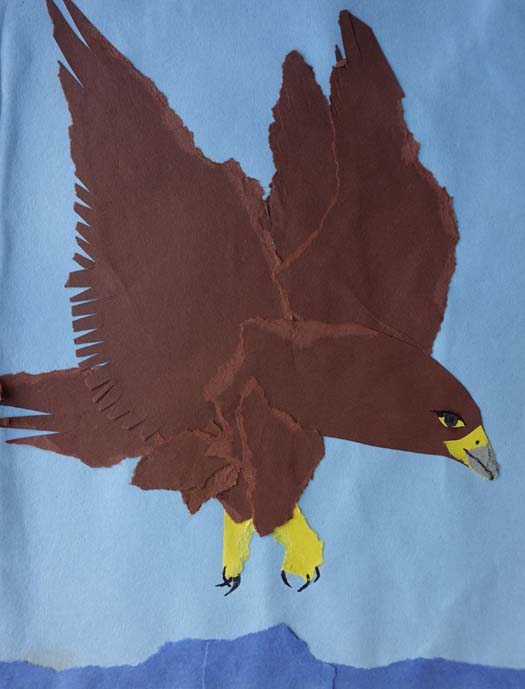
SAVING THE PEREGRINE FALCON: a Song to Remember
![]() |
| Peregrine Falcon Art |
Here is the song:
Peregrine Falcon
We are strong falcons,
We are mighty, mighty, mighty, mighty, mighty birds!
But we need your help!
We need your help!
We need your help right now!
We are little peeps,
We are little peeps.
We don't like the DDT that's in our mother's meat!
'Cause it breaks our shells,
It breaks our shells,
It breaks our shells apart!
We are scientists, we are here to help.
We will save you from the DDT!
We'll work together, you will surely see!
Thank you very much!
We were in "double Dutch",
But we're doing better now, we're better, better, now!
CAW CAW CAW CAW CAW CAW CAW CAW
CAW CAW CAW CAW CAW
THANK YOU FOR YOUR BOOK!
WE REALLY TOOK A LOOK!
FIRST GRADE WILL REMEMBER
TO HELP WILDLIFE!
The good news is that peregrine falcons are now (in 2016) no longer on the endangered species list, thanks to no more DDT and the dedicated work of many scientists. My book, Saving the Peregrine Falcon, illustrated with photos by Richard Hewett, is out of print but you may be able to find it in the library.
Saturday, July 26, 2014
GIRAFFE, with photos by Richard Hewett, Now Available at StarWalk Kids
Informative and engaging, Giraffe offers a close-up look at this gentle
giant of the African plains. A clear text and forty extraordinary
full-color photographs highlight the giraffe’s unusual physical features
and present a fascinating view of its day-to-day life and behavior,
both in captivity and in the wild.
My book, GIRAFFE, originally published by Morrow Junior Books, is now available as a digital book at StarWalk Kids and also soon at Amazon as a Kindle book. It is illustrated with captivating photos by Richard Hewett. I am thrilled to see this book available again. Through the month of July you can read all of the books in the StarWalk Kids catalogue for free. It is a great opportunity!
PUBLISHERS WEEKLY Review of Giraffe
Most
photos of giraffes are interesting: that powerful neck and the long slim
body that go with it make every movement unusual. Here they crane
toward their favorite food leaves from the acadia trees, posing awkwardly
to drink water without tipping over in one picture, then galloping
gracefully with all four legs off the ground in the next, twisting
around in a knot for a drink of mother's milk. The concise text offers a
general introduction to the giraffe and includes a close-up look at a
newborn calf young giraffe. Arnold also passes on other information,
like the animal's zoological name, which translates to "camel leopard."
Hewett's well-placed, full-color photos reveal both the elegant and
goofy sides of the giraffe. These two have collaborated on Koala,
Kangaroo and, more recently, Zebra. Ages 7-10.
Labels:
Amazon,
digital books,
GIRAFFE,
photos,
Richard Hewett,
StarWalk Kids
Subscribe to:
Posts (Atom)


.jpg)