Showing posts with label Wisconsin. Show all posts

Saturday, November 23, 2024

CHECK IT OUT! Read SETTLEMENT HOUSE GIRL at your Library


Little by little, my memoir,  SETTLEMENT HOUSE GIRL: Growing Up in the 1950s at North East Neighborhood House, Minneapolis, Minnesota is being added to library collections across the country. See list below. If any of these are libraries where you live, you can now check out my book now.  If your local library does not yet have the book, please put in a request for it. Thank you!

Libraries where you can find SETTLEMENT HOUSE GIRL

Los Angeles Public Library, Los Angeles, CA

Hennepin County Library, Minneapolis, MN

Plum Creek Library system, Worthington, MN

Duluth Public Library, Duluth, MN

Anoka County Library, Blaine, MN

University of Minnesota, Anderson Library, Minneapolis, MN

Grinnell College, Burling Library, Grinnell, IA

Drake Community Library, Grinnell, IA

West Des Moines Public Library, Des Moines, IA

Wisconsin Valley Library Service (WVLS), Wausau, WI

Milwaukee Public Library, Milwaukee, WI

Superior Public Library, Superior, WI

Legion Memorial Library, Mellen, WI

Rhinelander Public Library, Rhinelander, WI

Kenosha Public Library, Kenosha, WI

Wisconsin Historical Society Library, Madison, WI

Chicago Public Library, Chicago, IL

The Indianapolis Public Library, Indianapolis, IN

Humboldt County Library, Eureka, CA

Chapel Hill Public Library, Chapel Hill, NC

If your library is not on this list and has the book, please let me know and I will add it. I will continue to add libraries as they get and process my book.

Settlement House Girl is engaging, tracing Arnold’s growth from a young girl to an adult journeying into being a writer in her later life, but it’s also a valuable contribution to the social history of 20th-century America, offering urban history enthusiasts a wealth of information about the daily lives of families living in mid-century cities. The detailed accounts of Arnold's experiences provide a unique glimpse into the fabric of community life during this era, highlighting the interactions and shared experiences that defined the settlement house environment. BookLife (Publisher’s Weekly)

My visit to the Northeast branch of the Hennepin County Library in 1915.


Thursday, June 13, 2024

CAMP BOVEY 75 YEARS: Poster and Cards


"Ho,ho,ho, ho, I'm a Hodagger--rowing, fishing, swimming in the sun..." Camp Bovey, the ESNS camp in northern Wisconsin founded by my father is celebrating its 75th year! My brother Thomas Scheaffer created a wonderful painting, now available as a poster and as greeting cards. You can order them at the Camp Bovey Canteen Zazzle site. Every item you buy at the Camp Bovey Canteen helps to support Camp Bovey!

Cards are also available at the Zazzle site of Tom's beautiful painting of a moonrise over the lake at Camp Bovey.


This Saturday from 4-8 pm, Beats4Bovey is a free family party celebrating Camp Bovey's anniversary at ESNS in Minneapolis. I wish I could go. If you live in Minneapolis, come help celebrate! For more info go to the Camp Bovey Facebook page.

Camp Bovey is a small, rustic campground in northwestern Wisconsin that offers nature education in an exciting summer camp setting. We make learning about the environment fun while also helping campers feel confident about their outdoor skills and their ability to learn new things. Since 1949, campers have been calling Camp Bovey their summer home. From fishing in our private lake, to camping across our 200-acre property, to singing songs around campfires, Camp Bovey has helped thousands of youth build lifelong connections with friends and lasting connections to our Hodagger community.

Wednesday, May 8, 2024

BOOK SALES BENEFIT CAMP BOVEY, Article in the Northeaster Newspaper


Many thanks to reporter Alex Schlee for his excellent article in the May 3rd issue of the Northeaster Newspaper in Minneapolis about my book signing event on April 18th at East Side Neighborhood Services. (See my post of April 29th on this blog for my report of the event.)  Alex's article begins:

Of all the things Caroline Scheaffer Arnold remembers from her youth living at the Northeast Neighborhood house, the recreation programs offered there stand out the most. Among the memories of her childhood, those of Camp Bovey shine particularly bright. The settlement house’s summer campground in northern Wisconsin occupies a joyful place in her mind as well as in several chapters of her recently published memoir, “Settlement House Girl” (featured in the April 3 edition of The Northeaster). 

Camp Bovey is celebrating its 75th anniversary this year, coinciding neatly with the release of Arnold’s book in December last year. Though “Settlement House Girl” doesn’t predominantly focus on Camp Bovey, Arnold still regaled fans with tales from her time there at a book signing and celebration of the camp at East Side Neighborhood Services (ESNS) on the evening of April 18. 

For the rest of the article click HERE. As Alex points out, celebration of Camp Bovey's 75th year continues, including an outdoor dance party at ESNS called "Beats for Bovey" scheduled for June 15th. Check the ESNS/Camp Bovey website for updates and more information.

Settlement House Girl is available online at Amazon, or you can buy copies of the book at Eat My Words bookstore on 13th Street in Northeast Minneapolis.

Signing books at ESNS. Photo by Alex Schlee, Northeaster Newspaper


Monday, January 8, 2024

NEW BOOK! SETTLEMENT HOUSE GIRL, My Memoir About Growing Up in Minneapolis at North East Neighborhood House

Caroline, Age 4, with her parents and brother Steve, on the steps of North East Neighborhood House

A book project long in the making is a memoir of my childhood years in Minneapolis,
Settlement HouseGirl: Growing Up in the 1950s at North East Neighborhood House, Minneapolis, Minnesota. It focuses on the time our family lived at the settlement house that my father directed, as well as its influence on my life even after we moved to our own house in South Minneapolis. My original intention in writing the book was to explore the mid-20th century history of NENH and its role in the community at a time when settlement houses like it were in transition to today’s social service centers. But as I wrote down my memories and researched letters and documents, I realized that it was really a story about me and my family set in the context of a functioning settlement house and the surrounding neighborhood. The book ends in the summer of 1966, after I have graduated from Grinnell College, and the Scheaffer family heads to California. You can find the book on Amazon but you have to search for Caroline Scheaffer Arnold (which Google keeps trying to misspell!)

Settlement House Girl chronicles my childhood at North East Neighborhood House in Northeast Minneapolis, Minnesota, as I interacted and shared meals with other settlement house residents, participated in clubs, sports and community activities, and observed the roles of the staff and my social worker parents. It is an inside view of a working settlement house in the 1950s. The 38 chapters of the book range from my first days at the NENH nursery school, to after-school clubs and community holiday celebrations at the settlement, family and school life, and summers at Camp Bovey, the NENH camp in Wisconsin.

North East Neighborhood House, 1929 2nd Street NE. Our apartment was on the third floor.

North East Neighborhood House, founded in 1915, was part of the settlement house movement that began in England in 1884 and was brought to the US by people like Jane Addams at Hull House, in Chicago. Settlement houses, often called neighborhood houses, provided social services in immigrant and poor urban neighborhoods. NENH was supported by charitable donations and by the Community Chest (United Fund.)  Activities were led by volunteers who came from other parts of the city and by staff members who lived at the settlement house.

My father, Les Scheaffer, was the NENH director from 1948 to 1966. Few families lived in settlement houses as ours did and we were one of the last. By the 1950s, the tradition of social workers living in settlement houses was coming to an end. When my family moved out, it was the end of an era.

The stories in this book will spark memories in adults who grew up in the same time period, whether in Minneapolis or elsewhere. Librarians and teachers who know my books for children will find clues to my future life as a writer and illustrator. This book is about the role of settlement houses in urban neighborhoods at mid-century. It is a window onto a time when settlement houses were in transition from their roots in immigrant communities at the turn of the 20th century to becoming today’s modern social service agencies. What began as Northeast Neighborhood House more than 100 years ago, continues as East Side Neighborhood Services and it is still serving the needs of people in Northeast and East Minneapolis. My childhood at North East Neighborhood House provides a unique perspective on the role it has played in our social history.

Wednesday, July 12, 2023

CAROLINE ARNOLD'S WISCONSIN CONNECTION


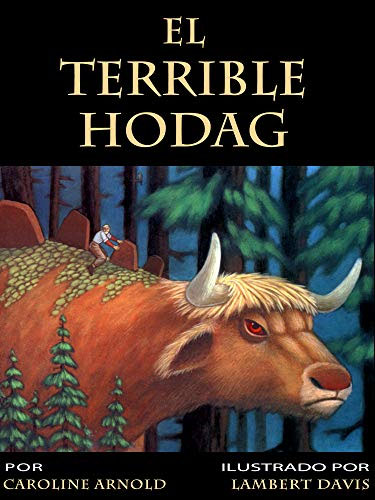
Caroline Arnold, author of The Terrible Hodag and the Animal Catchers (Boyds Mills Press, 2006), grew up in Minneapolis, Minnesota, and spent her summers in northern Wisconsin at Camp Bovey, near Solon Springs.  Stories of the Hodag, a scary beast with a head of an ox, feet of a bear, back of a dinosaur and tail of an alligator, were told around evening campfires and are among Caroline's earliest memories.

Camp Bovey is operated by the East Side Neighborhood Services in Minneapolis, where Caroline’s father, Lester Scheaffer, was director from 1948 to 1966. He founded Camp Bovey, then called Camp Hodag, in 1949. Caroline first went to Camp with her family, and then as she got older as a camper and a counselor. Camp Hodag, was first used as an outpost camp by Camp Nebagamon, a boys’ camp on Lake Nebagamon, in the 1930s and 1940s.  Tales of the Hodag are also told at Camp Nebagamon.
Caroline remembers summer trips from Camp Bovey to Rhinelander, Wisconsin, to see the original home of the Hodag, and where a giant statue of the Hodag greets visitors as they enter town. One of those trips coincided with Lumberjack Days and the chance to see log rolling, tree climbing and other lumberjack feats.

Stories of the Hodag and the lumberjacks are a regular feature at the Camp Bovey campfires. Each teller gives his or her own twist to the stories. One of Caroline’s favorite stories tells how the Hodag helped the lumberjacks to get rid of a mean boss man.  In her first children’s book about the Hodag, The Terrible Hodag, published in 1989, Caroline retold this story. The Terrible Hodag and the Animal Catchers, is an original tale in which the lumberjacks help the Hodag. “I wanted to turn the tables and give the lumberjacks a chance to return the favor to the Hodag.”
Caroline began writing books more than forty years ago when her children were young.  Since then she has published more than one hundred and seventy books.  Most of them are about animals and the environment. “My childhood experiences in the outdoors in northern Wisconsin developed my love of the natural world. Whether I write fiction or nonfiction, that passion for nature is the source of my ideas.”

Caroline Arnold now lives in Los Angeles, California. In 2015, she visited Camp Bovey with her family so her children and grandchildren could enjoy "rowing, fishing, swimming in the sun" and hear about the Hodag in the north woods of Wisconsin, as she did when she was their age.
Caroline and her brothers, 1951

Sunday, September 18, 2022

AUTHOR VISIT: Reading THE TERRIBLE HODAG to the ESNS Preschool in Minneapolis

Showing the picture of the Hodag on my Camp Bovey sweatshirt to the ESNS preschool.

My first trip to Camp Bovey, the ESNS camp in northern Wisconsin, was when I was four years old. Then it was called Camp Hodag and as we sat around the campfire at night, my father told stories of the Hodag—a creature with the head of an ox, feet of a bear, back of a dinosaur, and tail of an alligator. I remembered those stories and when I grew up and became a children’s book writer, I wrote some of them down.

Ole Swenson meets the Hodag.

Last Friday, I visited the preschool at ESNS in Minneapolis and read my book THE TERRIBLE HODAG to the three and four-year-olds. They were just as fascinated with the Hodag as I had been when I was four. One of the children had even gone to Camp Bovey with his family and was proudly wearing his Camp Bovey t-shirt with a picture of the Hodag on the front.

Camp Bovey.

My father, Lester Scheaffer, was the director of ESNS (East Side Neighborhood Services) for 18 years and founded Camp Bovey in 1949. I thank Margie, the preschool director at ESNS for inviting me to read to the children. Long ago, I too attended the ESNS nursery school, then housed at Northeast Neighborhood House.

THE TERRIBLE HODAG in Spanish, available on Amazon.

THE TERRIBLE HODAG has long been out of print in hardback (although you may be able to find it online as a used book, or in your library) but you can find a digital version of the book on Amazon in both English and Spanish.

Wednesday, February 24, 2021

THE TERRIBLE HODAG. Its Origins in Rhinelander, WI


As a child, I spent my summers at a small camp in northern Wisconsin, originally called Camp Hodag, now called Camp Bovey. In the evenings we sat around the campfire telling stories of a huge creature with the head of an ox, feet of a bear, back of a dinosaur and tail of an alligator--the terrible Hodag! When I grew up and became a children's book writer I wrote some of those stories down. One of them, The Terrible Hodag, is available as a Kindle book on Amazon. It is also available in Spanish, El Terrible Hodag.

The original Hodag stories were invented more than one hundred years ago in the logging camps of Rhinelander, Wisconsin. In an article written by Emily Bright for the Wisconsin Life blog in 2016, you can read how practical joker Gene Shepard created the Hodag and perpetuated the myth until he was finally debunked by an investigator from the Smithsonian Museum. She writes, "Rhinelander still has the hodag as its mascot for the city and the high school. Hodag statues line downtown like a cow parade with fangs. ....Thanks to Gene Shepard, Rhinelander is unique—and proud of it."

In the summer of 2006, I visited Rhinelander and took the photo below of the Hodag in front of the Chamber of Commerce greeting visitors as they drive into town.


Thursday, September 19, 2019

SHADOWS ON A WALL: The Autobiographical Writings of Lester Lewis Scheaffer (edited by Caroline Arnold) now an ebook at Amazon

My father's memoir, SHADOWS ON A WALL: The Autobiographical Writings of Lester Lewis Scheaffer, is finally up at Amazon as an ebook. (I am the editor.) These are poems and essays about his family, growing up in Kenosha, Wisconsin in the 1920s and 1930s, and a few stories about his life as a settlement house worker. If you enjoyed reading his story, Celebration at Tea Lake (about the memorable family celebration of my parents' 13th wedding anniversary) that I recently posted at my travel blog (The Intrepid Tourist), you may enjoy reading his other stories too.
The title of the book comes from a quote by Wallace Stegner, saved by my father in a folder he called "food for thought."
I was reminded of a remark of Willa Cather's, that you can't paint sunlight, you can only paint what it does with shadows on a wall. If you examine a life, as Socrates has been so tediously advising us to do for so many centuries, do you really examine the life, or do you examine the shadows it casts on other lives? Entity or relationships? Objective reality or the vanishing point of a multiple perspective exercise? Prism or the rainbows it refracts? And what if you're the wall? What if you never cast a shadow or a rainbow of your own, but have only caught those cast by others?
Wallace Stegner, THE SPECTATOR BIRD, p. 162

My father passed away in 1994. Here is the editor's note I wrote when I published a paper copy of the book in 1996:


            My father, Les Scheaffer, began this project in the late 1980's after the completion of his book Lutie and Mercy Ann, A Story of the Lockridge-Gibson Family 1875-1918, an historical account of the lives of his maternal grandparents.  The new book was to be a collection of his writings about his own life--poems, essays and stories--that focused on his family, childhood, school and early social work experiences.  Some of the pieces had been written as part of a creative writing class at the College of Marin, others were occasional pieces and some were created specifically for this project.  Two of the stories are about Camp Bovey, perhaps the greatest achievement of his life.  He once wrote, “But if there was a contest I think I would win: Camp Bovey, seventeen summers!  That was my great luck and my great love.” 
            From the earliest years of his life my father was a saver and keeper of records.  Many of his writings include excerpts from diaries, letters and notebooks or were inspired by them.  In all the pieces in this book as well as his other creative writing he always had the support and encouragement of my mother who was his “in house” editor and critic.  Some of the later stories are about experiences they shared.
            Born in 1914 at the beginning of World War I, my father’s life encompassed the Great Depression, World War II, the Vietnam War and tumult of the 1960s, moving from the Midwest, to the East Coast, back to the Midwest and finally to California.
            When my father died on May 1, 1994, he had made the final corrections on most entries but he had not yet begun assembling the book.  That job has fallen to me.  Not knowing exactly how he planned to organize the book, I have chosen to arrange the pieces chronologically and by theme.  Although I have listed myself as editor, I have changed as little as possible.  I have made a few spelling and punctuation corrections and, in a few cases, I’ve changed some words for clarity.  As far as I could tell he had not yet selected a title for the book, so I borrowed Shadows on the Wall from the Wallace Stegner quotation that he had chosen to be part of the book under a category he called “Food for Thought.”  The “shadows” in this book are vivid and multifaceted and tell us a great deal about the man that was my father.  We are fortunate that my father had the desire to tell the stories of his life and that he had the gift of telling them so well.  This book is a portrait of what it was like to grow up in a small Midwestern city in the 1920's and 30's and a glimpse into the lives of settlement workers just before and during World War II.  But that is not why he wrote it.  He wrote this book “for the kids” so that we might know a little of what made him the person he was.  For that I am glad.
                                                            Caroline Scheaffer Arnold
                                                            October 1996
 

Wednesday, March 30, 2016

Author Visit at Olson Elementary School, Verona, Wisconsin

Props for my program at Olson School, Verona, Wisconsin
Two weeks ago, on March 16th, I had an excellent visit to Olson Elementary School in Verona, Wisconsin, in the Madison Metropolitan School District. I spoke to four groups of children grades kindergarten through fifth grade using the Smart Board in the library to show my slides. All of the students had been able to read some of my books before my visit so they were well prepared and excited about the program. I thank librarian Sheri Boser for organizing my visit and preparing the students. At the end of each program I had a short question period and I was impressed by the good questions the students asked. During the lunch period I had a chance to walk the halls and see some of the art projects and other activities the students were doing, which included paintings in the style of Kandinsky by kindergarten students and a pen-pal project with children in Mexico tracking the migration of monarch butterflies.
This visit to Wisconsin was particularly meaningful for me because of my Wisconsin connection. Although I grew up in Minneapolis, Minnesota, I spent my summers in northern Wisconsin at Camp Bovey near Solon Springs. This is where I learned to love nature and watch wild animals and where we told Hodag stories around the campfire. As a child I also traveled to Kenosha, Wisconsin, on the shore of Lake Michigan, to visit my grandparents and cousins. So, to find my books read by children in Wisconsin today was especially satisfying.