Showing posts with label Camp Bovey. Show all posts

Monday, November 2, 2026

MY FATHER'S MEMOIR--SHADOWS ON A WALL, Now Available as an Audio Book


My memoir about growing up at North East Neighborhood House in Minneapolis in the 1950s, SETTLEMENT HOUSE GIRL, was inspired by my father's memoir, SHADOWS ON A WALL, about his childhood and career as a settlement house worker in the 1930s through the 1970s. My memoir is a window on life in mid-century American . His memoir chronicles the previous generation. Together the two books shed light on the roots of the person I am today.

SHADOWS ON A WALL: The Autobiographical Writings of Lester Lewis Scheaffer has been available for some time on Amazon as an e-book. It is now available as an AUDIO BOOK. You can read a short sample for free.

Here is the description of SHADOWS ON A WALL on Amazon:

Les Scheaffer's career as a settlement house worker began in Chicago in the 1930s and continued in Philadelphia, Pittsburgh, Syracuse, Minneapolis and San Francisco. In his retirement, he reflected on his life and family in a series of poems and essays, writing especially about his growing up years in Kenosha, Wisconsin. This book is a portrait of what it was like to grow up in a small Midwestern city in the 1920s and 1930s and a glimpse into the lives of settlement workers just before and during World War II. It includes two stories about Camp Bovey, the settlement house camp in northern Wisconsin, founded by Les when he was the director of the Northeast Neighborhood House in Minneapolis. The title of the book is from a Wallace Stegner quotation that he had chosen to be part of the book under a category called "food for thought." The "shadows" in this book are vivid and multifaceted and tell us a great deal about the man that was Les Scheaffer.

My book, SETTLEMENT HOUSE GIRL, is available on Amazon as both an e-book and as a paperback. It will also be available as an audio book soon.
T
The Scheaffer family at NENH 1948. Les, Kay, Caroline (age 4) and Stephen (10 months).


Wednesday, March 5, 2025

READERS' COMMENTS ABOUT SETTLEMENT HOUSE GIRL


Nothing makes an author happier than to hear from readers how much they liked their book. I am gratified by the good response I continue to get from readers of my book SETTLEMENT HOUSE GIRL: Growing Up in the 1950s at North East Neighborhood House, Minneapolis, Minnesota. Some of the comments are from friends and classmates, but many are from people I have never met. Some grew up in Northeast Minneapolis like I did, but many grew up elsewhere but share similar experiences. Here are just a few of the comments:

North East Neighborhood House

Your book allowed me to relive precious moments of my childhood. I loved every word and didn’t want it to end.

Your early life experiences, although unique from the Settlement House aspect, mirror many of our own--a stamp collection, a Schwinn bike, a Brownie camera, June Allyson paper dolls, the corner store for sweet treats and the freedom we had to just hop on our bikes and go anywhere.

I loved all the photos!

Another glowing facet of the book is that her parents' dedication as social workers is beyond admirable.

Throughout the book I was struck by the riches to be discovered in the memories of a modest life.

I learned so much about you—but also about the Settlement House!

I can relate to playing outside until the streetlights came on, shopping at a small neighborhood grocery store, ice skating on an outdoor rink in the park…

As I read, there were many eureka moments…. And of course the skating—all day long—entirely on our own—no parents hovering to make sure we didn’t fall.

For me, Camp Bovey provided father figures, learning to appreciate nature, camping, canoeing, and swimming…

I too am a Hodagger!

The Hodag, mascot of Camp Bovey (formerly Camp Hodag).


Thursday, June 13, 2024

CAMP BOVEY 75 YEARS: Poster and Cards


"Ho,ho,ho, ho, I'm a Hodagger--rowing, fishing, swimming in the sun..." Camp Bovey, the ESNS camp in northern Wisconsin founded by my father is celebrating its 75th year! My brother Thomas Scheaffer created a wonderful painting, now available as a poster and as greeting cards. You can order them at the Camp Bovey Canteen Zazzle site. Every item you buy at the Camp Bovey Canteen helps to support Camp Bovey!

Cards are also available at the Zazzle site of Tom's beautiful painting of a moonrise over the lake at Camp Bovey.


This Saturday from 4-8 pm, Beats4Bovey is a free family party celebrating Camp Bovey's anniversary at ESNS in Minneapolis. I wish I could go. If you live in Minneapolis, come help celebrate! For more info go to the Camp Bovey Facebook page.

Camp Bovey is a small, rustic campground in northwestern Wisconsin that offers nature education in an exciting summer camp setting. We make learning about the environment fun while also helping campers feel confident about their outdoor skills and their ability to learn new things. Since 1949, campers have been calling Camp Bovey their summer home. From fishing in our private lake, to camping across our 200-acre property, to singing songs around campfires, Camp Bovey has helped thousands of youth build lifelong connections with friends and lasting connections to our Hodagger community.

Wednesday, May 8, 2024

BOOK SALES BENEFIT CAMP BOVEY, Article in the Northeaster Newspaper


Many thanks to reporter Alex Schlee for his excellent article in the May 3rd issue of the Northeaster Newspaper in Minneapolis about my book signing event on April 18th at East Side Neighborhood Services. (See my post of April 29th on this blog for my report of the event.)  Alex's article begins:

Of all the things Caroline Scheaffer Arnold remembers from her youth living at the Northeast Neighborhood house, the recreation programs offered there stand out the most. Among the memories of her childhood, those of Camp Bovey shine particularly bright. The settlement house’s summer campground in northern Wisconsin occupies a joyful place in her mind as well as in several chapters of her recently published memoir, “Settlement House Girl” (featured in the April 3 edition of The Northeaster). 

Camp Bovey is celebrating its 75th anniversary this year, coinciding neatly with the release of Arnold’s book in December last year. Though “Settlement House Girl” doesn’t predominantly focus on Camp Bovey, Arnold still regaled fans with tales from her time there at a book signing and celebration of the camp at East Side Neighborhood Services (ESNS) on the evening of April 18. 

For the rest of the article click HERE. As Alex points out, celebration of Camp Bovey's 75th year continues, including an outdoor dance party at ESNS called "Beats for Bovey" scheduled for June 15th. Check the ESNS/Camp Bovey website for updates and more information.

Settlement House Girl is available online at Amazon, or you can buy copies of the book at Eat My Words bookstore on 13th Street in Northeast Minneapolis.

Signing books at ESNS. Photo by Alex Schlee, Northeaster Newspaper


Monday, April 29, 2024

SETTLEMENT HOUSE GIRL Book Launch in Minneapolis and Camp Bovey 75th Celebration

Book launch of SETTLEMENT HOUSE GIRL at ESNS. Photo of Les Scheaffer, ESNS Director 1948-1966.

I was pleased to have a good crowd at my book launch of SETTLEMENT HOUSE GIRL a week ago Thursday (April 18th) at East Side Neighborhood Services in Minneapolis. Many thanks to everyone who came. And thanks to my husband Art for being my official photographer!

Gathering for the program at ESNS.

As people arrived I had the chance to chat and, in some cases, catch up on more than seventy years of memories! Some people there were connected to Camp Bovey, others from my grade schools (Holland and Windom) and junior high (Ramsey) and high school (Washburn.) Some of the attendees were from the surrounding Northeast neighborhood, including some from Margaret Barry House, the other settlement house in Northeast Minneapolis, started about the same time as North East Neighborhood House (1915). Margaret Barry House and North East Neighborhood House merged in 1963 under the direction of my father and became East Side Neighborhood Services.  Both the Margaret Barry building and the North East Neighborhood House building have now been converted to apartments and the ESNS programs have moved to a new building down the street at 1700 Second Street Northeast.

Books for sale.

The event was held in the large meeting room at ESNS where tables and chairs had been set up along with refreshments (cookies and cake), a table for book sales, another table for Camp Bovey special 75th anniversary t-shirts and sweatshirts, and a kids craft table.  

75th Camp Bovey anniversary t-shirts.

Many thanks to Mary Anstett, Lindsay Walz, Inge Melius, and Debi Krause for coordinating the book and shirt sales, and for making sure that everything ran smoothly. All proceeds from the sales went to support Camp Bovey. A reporter from the Northeaster Newspaper came to take notes and will include his report in the May 1 issue.  The April 17 issue of the paper featured an excellent article about the history of Camp Bovey and plans for the coming summer and anniversary celebration.

Presentation and reading of book.

I had created a rotating slide show depicting the 75 years of Camp Bovey’s history and that played on the screen while people gathered. Then, after introductions by Mary and Lindsay, I gave a talk (with more slides) about the creation of my book, followed by reading one of the Camp Bovey chapters from my book. I then opened it up to questions from the audience. I was glad to find people were so interested! And finally, as people lined up for their turn, I signed books that they had purchased.

Autographing books.

It was a very busy evening and I wish there had been more time to chat longer with each and every one of the people who came. 

At ESNS.
Since last Thursday, I have heard from numerous people, and they all say that my book has brought back many of their own memories.  I am glad. One of the reasons I wrote the book is to write those memories down and keep them from getting lost. They are my memories, but they are also part of Northeast Minneapolis history.

Display of Camp Bovey and Hodag memories.


Thursday, April 4, 2024

BOOK SIGNING in Minneapolis, April 18th, of SETTLEMENT HOUSE GIRL: SAVE THE DATE!


If you will be in Minneapolis on Thursday, April 18th, please join me from 6:30-8:00pm at East Side Neighborhood Services where I will be giving a program and signing my new memoir SETTLEMENT HOUSE GIRL: Growing Up in the 1950s at North East Neighborhood House. 

Find out what it was like to live at a working settlement house in the 1950s. Learn about the early days of Camp Bovey, the ESNS camp founded by my father Les Scheaffer, now celebrating its 75th year. Learn about the roots of my future career as a writer, and how these experiences shaped my view of the world.

Until I was ten I lived with my family at North East Neighborhood House, a settlement house in Northeast Minneapolis, now East Side Neighborhood Services. The 38 chapters of the book range from my first days at the NENH nursery school, to after school clubs and community holiday celebrations at the settlement house, to family and school life. Four of the chapters are about my summers at Camp Bovey and their connection to NENH. Few families lived in settlement houses as ours did. When my family moved out, it was the end of an era.

I hope you will be able to come!

East Side Neighborhood Services

1700 2nd Street NE

Minneapolis, Minnesota 54513

For more information, contact ESNS at 612-781-6011

SETTLEMENT HOUSE GIRL: Growing Up in the 1950s at North East Neighborhood House
is available at Amazon or to order at your favorite book store. 

Monday, March 18, 2024

ART SHOW--PAINTINGS BY TOM SCHEAFFER, at the Maya Moon Collective, San Diego, CA


My brother Tom Scheaffer is exhibiting his beautiful paintings at the Maya Moon Collective in San Diego, California, 3349 Adams Avenue, San Diego, CA 92116. The opening reception is Saturday, March 23rd, 6 to 8 pm. If you are in the San Diego area, be sure to stop by to see the exhibit and have a bite to eat at the Maya Moon Cafe. The paintings will be up until the end of April.


Tom works in a colorful, expressionist/realistic style, depicting scenes in nature, especially of places in Southern California. His paintings are also inspired by his roots in the upper Midwest and summers in the North Woods at Camp Bovey in northern Wisconsin. Here are some samples of the paintings in the exhibit at the Maya Moon Restaurant.


Monday, January 8, 2024

NEW BOOK! SETTLEMENT HOUSE GIRL, My Memoir About Growing Up in Minneapolis at North East Neighborhood House

Caroline, Age 4, with her parents and brother Steve, on the steps of North East Neighborhood House

A book project long in the making is a memoir of my childhood years in Minneapolis,
Settlement HouseGirl: Growing Up in the 1950s at North East Neighborhood House, Minneapolis, Minnesota. It focuses on the time our family lived at the settlement house that my father directed, as well as its influence on my life even after we moved to our own house in South Minneapolis. My original intention in writing the book was to explore the mid-20th century history of NENH and its role in the community at a time when settlement houses like it were in transition to today’s social service centers. But as I wrote down my memories and researched letters and documents, I realized that it was really a story about me and my family set in the context of a functioning settlement house and the surrounding neighborhood. The book ends in the summer of 1966, after I have graduated from Grinnell College, and the Scheaffer family heads to California. You can find the book on Amazon but you have to search for Caroline Scheaffer Arnold (which Google keeps trying to misspell!)

Settlement House Girl chronicles my childhood at North East Neighborhood House in Northeast Minneapolis, Minnesota, as I interacted and shared meals with other settlement house residents, participated in clubs, sports and community activities, and observed the roles of the staff and my social worker parents. It is an inside view of a working settlement house in the 1950s. The 38 chapters of the book range from my first days at the NENH nursery school, to after-school clubs and community holiday celebrations at the settlement, family and school life, and summers at Camp Bovey, the NENH camp in Wisconsin.

North East Neighborhood House, 1929 2nd Street NE. Our apartment was on the third floor.

North East Neighborhood House, founded in 1915, was part of the settlement house movement that began in England in 1884 and was brought to the US by people like Jane Addams at Hull House, in Chicago. Settlement houses, often called neighborhood houses, provided social services in immigrant and poor urban neighborhoods. NENH was supported by charitable donations and by the Community Chest (United Fund.)  Activities were led by volunteers who came from other parts of the city and by staff members who lived at the settlement house.

My father, Les Scheaffer, was the NENH director from 1948 to 1966. Few families lived in settlement houses as ours did and we were one of the last. By the 1950s, the tradition of social workers living in settlement houses was coming to an end. When my family moved out, it was the end of an era.

The stories in this book will spark memories in adults who grew up in the same time period, whether in Minneapolis or elsewhere. Librarians and teachers who know my books for children will find clues to my future life as a writer and illustrator. This book is about the role of settlement houses in urban neighborhoods at mid-century. It is a window onto a time when settlement houses were in transition from their roots in immigrant communities at the turn of the 20th century to becoming today’s modern social service agencies. What began as Northeast Neighborhood House more than 100 years ago, continues as East Side Neighborhood Services and it is still serving the needs of people in Northeast and East Minneapolis. My childhood at North East Neighborhood House provides a unique perspective on the role it has played in our social history.

Wednesday, July 12, 2023

CAROLINE ARNOLD'S WISCONSIN CONNECTION


Caroline Arnold, author of The Terrible Hodag and the Animal Catchers (Boyds Mills Press, 2006), grew up in Minneapolis, Minnesota, and spent her summers in northern Wisconsin at Camp Bovey, near Solon Springs.  Stories of the Hodag, a scary beast with a head of an ox, feet of a bear, back of a dinosaur and tail of an alligator, were told around evening campfires and are among Caroline's earliest memories.

Camp Bovey is operated by the East Side Neighborhood Services in Minneapolis, where Caroline’s father, Lester Scheaffer, was director from 1948 to 1966. He founded Camp Bovey, then called Camp Hodag, in 1949. Caroline first went to Camp with her family, and then as she got older as a camper and a counselor. Camp Hodag, was first used as an outpost camp by Camp Nebagamon, a boys’ camp on Lake Nebagamon, in the 1930s and 1940s.  Tales of the Hodag are also told at Camp Nebagamon.
Caroline remembers summer trips from Camp Bovey to Rhinelander, Wisconsin, to see the original home of the Hodag, and where a giant statue of the Hodag greets visitors as they enter town. One of those trips coincided with Lumberjack Days and the chance to see log rolling, tree climbing and other lumberjack feats.

Stories of the Hodag and the lumberjacks are a regular feature at the Camp Bovey campfires. Each teller gives his or her own twist to the stories. One of Caroline’s favorite stories tells how the Hodag helped the lumberjacks to get rid of a mean boss man.  In her first children’s book about the Hodag, The Terrible Hodag, published in 1989, Caroline retold this story. The Terrible Hodag and the Animal Catchers, is an original tale in which the lumberjacks help the Hodag. “I wanted to turn the tables and give the lumberjacks a chance to return the favor to the Hodag.”
Caroline began writing books more than forty years ago when her children were young.  Since then she has published more than one hundred and seventy books.  Most of them are about animals and the environment. “My childhood experiences in the outdoors in northern Wisconsin developed my love of the natural world. Whether I write fiction or nonfiction, that passion for nature is the source of my ideas.”

Caroline Arnold now lives in Los Angeles, California. In 2015, she visited Camp Bovey with her family so her children and grandchildren could enjoy "rowing, fishing, swimming in the sun" and hear about the Hodag in the north woods of Wisconsin, as she did when she was their age.
Caroline and her brothers, 1951

Sunday, September 18, 2022

AUTHOR VISIT: Reading THE TERRIBLE HODAG to the ESNS Preschool in Minneapolis

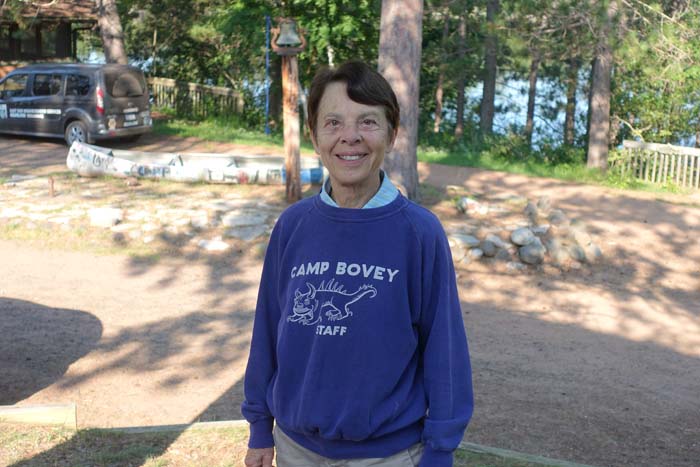
Showing the picture of the Hodag on my Camp Bovey sweatshirt to the ESNS preschool.

My first trip to Camp Bovey, the ESNS camp in northern Wisconsin, was when I was four years old. Then it was called Camp Hodag and as we sat around the campfire at night, my father told stories of the Hodag—a creature with the head of an ox, feet of a bear, back of a dinosaur, and tail of an alligator. I remembered those stories and when I grew up and became a children’s book writer, I wrote some of them down.

Ole Swenson meets the Hodag.

Last Friday, I visited the preschool at ESNS in Minneapolis and read my book THE TERRIBLE HODAG to the three and four-year-olds. They were just as fascinated with the Hodag as I had been when I was four. One of the children had even gone to Camp Bovey with his family and was proudly wearing his Camp Bovey t-shirt with a picture of the Hodag on the front.

Camp Bovey.

My father, Lester Scheaffer, was the director of ESNS (East Side Neighborhood Services) for 18 years and founded Camp Bovey in 1949. I thank Margie, the preschool director at ESNS for inviting me to read to the children. Long ago, I too attended the ESNS nursery school, then housed at Northeast Neighborhood House.

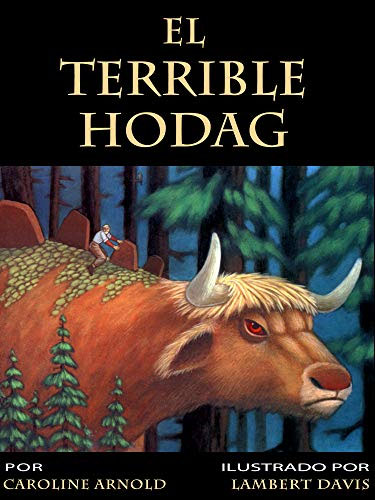
THE TERRIBLE HODAG in Spanish, available on Amazon.

THE TERRIBLE HODAG has long been out of print in hardback (although you may be able to find it online as a used book, or in your library) but you can find a digital version of the book on Amazon in both English and Spanish.

Wednesday, October 13, 2021

MAKE A HODAG SCULPTURE WITH CLAY

Clay sculpture of a Hodag

What creature has the head of an ox, feet of a bear, back of a dinosaur, and tail of an alligator? The HODAG! You can read stories about the Hodag in my books The Terrible Hodag and The Terrible Hodag and the Animal Catchers. (The Terrible Hodag is also available on Kindle in Spanish as El Terrible Hodag.)


The Hodag is the mascot of Camp Bovey, the camp for children and families in northern Wisconsin operated by East Side Neighborhood Services in Minneapolis. 


At the recent Night Under the Stars celebration of Camp Bovey at ESNS, children had the chance to make their own Hodags with clay. 


You can enjoy doing this project too! Remember, that even though the Hodag might look scary, it is really a friendly creature who loves the forest.


Tuesday, September 21, 2021

A NIGHT UNDER THE STARS, Celebrating Camp Bovey

Family fun with live music, food trucks, crafts, singing, dancing.
I learned to love nature at Camp Bovey, the summer camp for kids and families of Northeast Minneapolis, located in the woods of northern Wisconsin. Come celebrate–in person or in spirit--at A Night Under the Stars with G.B. Leighton on October 1st at East Side Neighborhood Services and help the next generation of Camp Bovey families enjoy high quality experiences in nature. Every donation helps! Proceeds will go towards the Camp Bovey restoration campaign. Click HERE for the link to tickets/donations.
Camp Bovey
Camp Bovey is operated by East Side Neighborhood Services in Minneapolis and was founded by my father when he was the director. My first visit to Camp Bovey was in 1949 and I went there every summer after that until 1966, when our family moved to California. I went swimming, fishing, boating, made lanyards in the craft cabin, played Capture the Flag, and sat around the campfire listening to stories about the Hodag, a creature with the head of an ox, feet of a bear, back of a dinosaur, and tail of an alligator. The Hodag is the camp’s mascot. After I became a children's book writer, the Hodag became the subject of two of my fiction books.
Visiting Camp Bovey in 2018. Wearing my staff sweatshirt, saved from 1966.
I have been involved in a fund raising effort to make much needed upgrades to keep Camp Bovey the wonderful place it has always been for kids and families of Northeast Minneapolis. I’d love to have you participate. 


Wednesday, February 24, 2021

THE TERRIBLE HODAG. Its Origins in Rhinelander, WI


As a child, I spent my summers at a small camp in northern Wisconsin, originally called Camp Hodag, now called Camp Bovey. In the evenings we sat around the campfire telling stories of a huge creature with the head of an ox, feet of a bear, back of a dinosaur and tail of an alligator--the terrible Hodag! When I grew up and became a children's book writer I wrote some of those stories down. One of them, The Terrible Hodag, is available as a Kindle book on Amazon. It is also available in Spanish, El Terrible Hodag.

The original Hodag stories were invented more than one hundred years ago in the logging camps of Rhinelander, Wisconsin. In an article written by Emily Bright for the Wisconsin Life blog in 2016, you can read how practical joker Gene Shepard created the Hodag and perpetuated the myth until he was finally debunked by an investigator from the Smithsonian Museum. She writes, "Rhinelander still has the hodag as its mascot for the city and the high school. Hodag statues line downtown like a cow parade with fangs. ....Thanks to Gene Shepard, Rhinelander is unique—and proud of it."

In the summer of 2006, I visited Rhinelander and took the photo below of the Hodag in front of the Chamber of Commerce greeting visitors as they drive into town.


Thursday, September 19, 2019

SHADOWS ON A WALL: The Autobiographical Writings of Lester Lewis Scheaffer (edited by Caroline Arnold) now an ebook at Amazon

My father's memoir, SHADOWS ON A WALL: The Autobiographical Writings of Lester Lewis Scheaffer, is finally up at Amazon as an ebook. (I am the editor.) These are poems and essays about his family, growing up in Kenosha, Wisconsin in the 1920s and 1930s, and a few stories about his life as a settlement house worker. If you enjoyed reading his story, Celebration at Tea Lake (about the memorable family celebration of my parents' 13th wedding anniversary) that I recently posted at my travel blog (The Intrepid Tourist), you may enjoy reading his other stories too.
The title of the book comes from a quote by Wallace Stegner, saved by my father in a folder he called "food for thought."
I was reminded of a remark of Willa Cather's, that you can't paint sunlight, you can only paint what it does with shadows on a wall. If you examine a life, as Socrates has been so tediously advising us to do for so many centuries, do you really examine the life, or do you examine the shadows it casts on other lives? Entity or relationships? Objective reality or the vanishing point of a multiple perspective exercise? Prism or the rainbows it refracts? And what if you're the wall? What if you never cast a shadow or a rainbow of your own, but have only caught those cast by others?
Wallace Stegner, THE SPECTATOR BIRD, p. 162

My father passed away in 1994. Here is the editor's note I wrote when I published a paper copy of the book in 1996:


            My father, Les Scheaffer, began this project in the late 1980's after the completion of his book Lutie and Mercy Ann, A Story of the Lockridge-Gibson Family 1875-1918, an historical account of the lives of his maternal grandparents.  The new book was to be a collection of his writings about his own life--poems, essays and stories--that focused on his family, childhood, school and early social work experiences.  Some of the pieces had been written as part of a creative writing class at the College of Marin, others were occasional pieces and some were created specifically for this project.  Two of the stories are about Camp Bovey, perhaps the greatest achievement of his life.  He once wrote, “But if there was a contest I think I would win: Camp Bovey, seventeen summers!  That was my great luck and my great love.” 
            From the earliest years of his life my father was a saver and keeper of records.  Many of his writings include excerpts from diaries, letters and notebooks or were inspired by them.  In all the pieces in this book as well as his other creative writing he always had the support and encouragement of my mother who was his “in house” editor and critic.  Some of the later stories are about experiences they shared.
            Born in 1914 at the beginning of World War I, my father’s life encompassed the Great Depression, World War II, the Vietnam War and tumult of the 1960s, moving from the Midwest, to the East Coast, back to the Midwest and finally to California.
            When my father died on May 1, 1994, he had made the final corrections on most entries but he had not yet begun assembling the book.  That job has fallen to me.  Not knowing exactly how he planned to organize the book, I have chosen to arrange the pieces chronologically and by theme.  Although I have listed myself as editor, I have changed as little as possible.  I have made a few spelling and punctuation corrections and, in a few cases, I’ve changed some words for clarity.  As far as I could tell he had not yet selected a title for the book, so I borrowed Shadows on the Wall from the Wallace Stegner quotation that he had chosen to be part of the book under a category he called “Food for Thought.”  The “shadows” in this book are vivid and multifaceted and tell us a great deal about the man that was my father.  We are fortunate that my father had the desire to tell the stories of his life and that he had the gift of telling them so well.  This book is a portrait of what it was like to grow up in a small Midwestern city in the 1920's and 30's and a glimpse into the lives of settlement workers just before and during World War II.  But that is not why he wrote it.  He wrote this book “for the kids” so that we might know a little of what made him the person he was.  For that I am glad.
                                                            Caroline Scheaffer Arnold
                                                            October 1996