Wednesday, September 25, 2013

PAPER PLATE DINOSAURS

Who doesn't love dinosaurs?  First graders at a school I visited read my book Dinosaurs All Around, which tells how artist Steven Czerkas creates life-size dinosaurs for museum displays, and then created their own dinosaurs with paper plates.  The curved edge of the paper plate is perfect for attaching the bony plates on the back of a stegosaurus.  I love the way students gave the dinosaurs all sorts of different colors.

Dinosaurs All Around was published in 1993 by Clarion Books.
Stephen Czerkas's dinosaur models, ranging from the largest carnivores to hatching babies, are widely exhibited in museums. This book is based on a traveling exhibit, "Dinosaurs: A Global View," organized by the Natural History Museum of Los Angeles County and a visit to the artist's studio. Czerkas draws on a painstaking study of fossil bones, living reptiles, and modern animal behavior in the process of putting skin over the bones, choosing color and markings and action poses for the most true-to-life portrayal possible.

Learn how such models are constructed, and the decisions the artist must make in portraying these long-vanished reptiles. Find out how models like these help us to understand what life was like millions of years ago when dinosaurs were alive.

Wednesday, September 18, 2013

KINDLE: More of My Books Now Available for Your Kindle

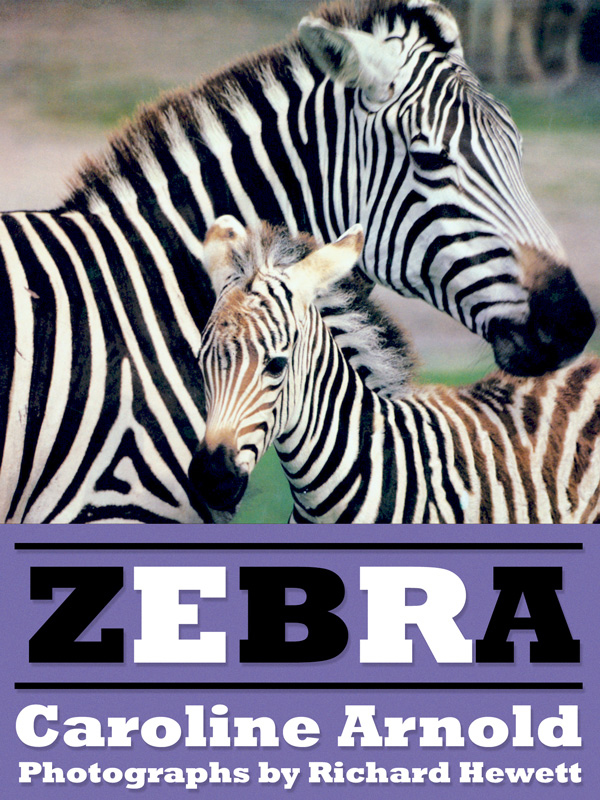
StarWalk Kids has now published nine more of my books on Amazon Kindle, all from my animal series illustrated with photos by Richard Hewett.  With new formatting and updating, these out-of-print books are getting a new life as digital books, perfect for your computer and other digital devices.  I now have a total of 20 titles available for download as Kindle books. The books are also available through the StarWalk Kids subscription program.
Look for these new titles:
HIPPO
KANGAROO
ELEPHANT
ZEBRA
BAT
FLAMINGO
LION
KILLER WHALE
CAMEL

Wednesday, September 11, 2013

WALRUS MOTHER AND BABY Coloring Page


A walrus mother has a baby, called a calf, about 15 months after mating. At birth, a walrus calf weighs 100 to 160 pounds (45 to 72 kilograms) and is about 4.5 feet (1.4 meters) long.  The calf is almost the size of a person!
You can learn more about walruses in my book A WALRUS' WORLD (Picture Window Books, 2010.)
To print a coloring page of a walrus mother and baby, click here.

Wednesday, September 4, 2013

A Mural as a Class Project: Miwok Village Life

Mural of Miwok Village by Third Grade Students
Most students in third grade learn about Native Americans.  In my brother’s third grade class in Novato, California, located in Marin County just north of San Francisco, the children learned about the Miwoks, a tribe indigenous to their area. Their studies culminated in books that each child wrote and illustrated, telling about the life of a traditional Miwok family. (I had a chance to see the books in progress on a class visit.) The students also made a mural depicting Miwok life.  Everyone in the class participated in painting the background of the mural, using brushes and sponges to create the local hills and landscape.  Then each student drew animals, birds, people, chopas (dwellings) and other elements and glued them to the background.  The result is a beautiful and detailed depiction of a Miwok village. By working together the students created a piece of art much more complex than each could have done alone and enjoyed the satisfaction of a joint project.

Wednesday, August 28, 2013

School Garden: Plant in Containers

An old tire, dresser drawer, tin can, or bucket can make a good gardening container
Gardening is a great hands-on learning project with kids.  But many schools have limited gardening space.  One solution is to use containers.  Container gardening is a flexible alternative to the usual garden plot. Small containers and some containers with wheels can be taken in at night. Larger containers can be used for rooftop and parking lot garden spots.  Spread wood chips or sawdust to cover the asphalt and you can transform a hot dusty corner of the playground into a green oasis for your children.
Containers  should hold at least three gallons of soil for large or deep-rooted plants such as tomatoes, squash and melons, and one and one-half gallons of soil for smaller plants like lettuce, onions, and herbs.  When filling the container with soil, leave a one to three inch basin below the lip for watering.  Containers should have drainage holes in the bottom.  And, containers should be made of a material that will not rot or deteriorate before the plants have matured.

Have fun growing plants and reaping the harvest!

Thanks to Children’s Gardens, A Field Guide for Teachers, Parents and Volunteers by Elizabeth Bremner and John Pusey.  Illustrations by Caroline Arnold

Wednesday, August 21, 2013

Project: WIGGLE AND WAGGLE HATS

I'm always amazed at the creative projects students do after reading my books. When I visited Susan B. Anthony School in Sacramento several years ago, I found a whole class wearing these charming hats inspired by my book Wiggle and Waggle.  With magic markers and yellow construction paper you can make your own Wiggle and Waggle hats too!

Wednesday, August 14, 2013

The Writing Process: My Idea Box

So you want to write a children's book!  Ideas for books are everywhere. They come from our own interests and experiences, both as adults and when we were children.  They can be found in all kinds of written material including books, newspapers, magazines, museum and travel brochures--even junk mail!  Here are some good sources of ideas.
  •     Television, radio, movies, the internet.
  •     Children’s questions.
  •     Your observations of children at school and at play.
  •     School curriculum needs.
  •     Parenting needs.
    I’ve learned to keep my “idea antennae” up all the time because I never know when something will trigger an idea that might later develop into a topic for a book.  It might be a conversation with friend, an interaction with a child at a school, or a news item on the radio.  I always keep a pen and paper handy so that I can quickly jot down a few words when the idea is fresh.
    On the shelf above my desk I have my “idea box” in which I toss notes scribbled on bits of paper, articles cut out of the newspaper or torn out of magazines, brochures collected on vacations and anything else that might be relevant to a future book project.  Periodically I go through the box and select a few items to develop into possible books.   I already have enough ideas to last for at least two more lifetimes, and since I’ll never be able to use them all, my challenge is to try to select the best ones.